Unshaven Hair Transplant
What Is Unshaven Hair Transplant in Turkey?
Hair transplantation can restore coverage in areas affected by permanent hair loss, but shaving the scalp before surgery may concern patients who want to maintain their existing hairstyle. For some individuals, the temporary change in appearance can be an important factor when deciding whether to undergo treatment.
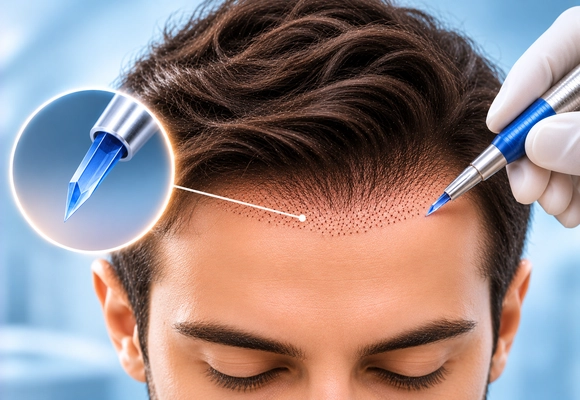
Designed to preserve most or all of the existing hair length, an unshaven hair transplant in Turkey is a surgical hair restoration procedure performed without completely shaving the head. Depending on the technique, the surgeon may leave the recipient area unshaven, trim small concealed sections of the donor area, or use specialized instruments to extract longer hair follicles.
Unshaven transplantation is not a separate biological method of hair restoration. It is an adaptation of established follicular extraction and implantation techniques. The most suitable approach depends on the patient’s hair loss pattern, donor density, hairstyle, and required graft count.
How Does Unshaven Hair Transplantation Work?
Successful hair restoration requires healthy donor follicles, careful extraction, and accurate placement in the recipient area. Preserving existing hair length introduces additional technical considerations because longer strands can obstruct visibility during surgery.
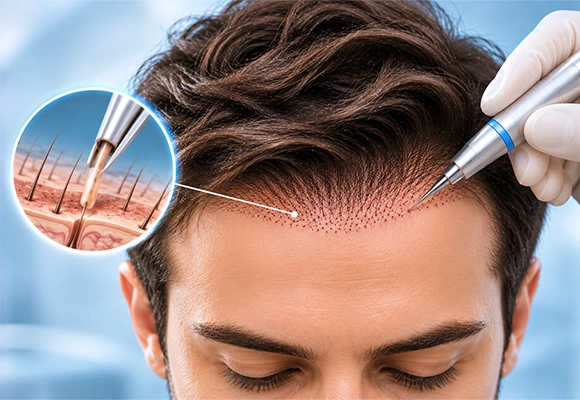
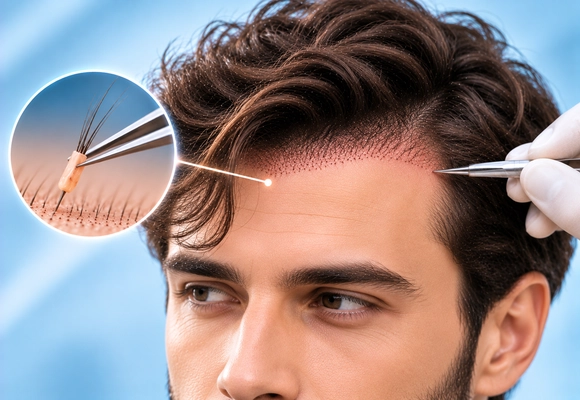
During an unshaven hair transplant in Turkey, the medical team typically extracts follicular units using FUE techniques and implants them into areas affected by hair loss. The donor region may remain unshaven or undergo limited trimming, depending on the selected method. The transplanted follicles must still be positioned at appropriate angles and depths.
Who Is a Good Candidate for an Unshaven Hair Transplant?
The ideal candidate has sufficient donor hair, a stable pattern of hair loss, and realistic expectations about achievable density. Individuals requiring relatively small or moderate graft numbers may be particularly suitable for techniques that preserve their hairstyle.
Before recommending an unshaven hair transplant in Turkey, a qualified physician should evaluate scalp health, donor density, hair characteristics, and the expected progression of hair loss. Patients with extensive baldness or limited donor reserves may benefit more from a conventional approach that provides greater surgical visibility.
What Types of Hair Loss Can Unshaven Hair Transplantation Treat?
Permanent hair loss can develop for several reasons, including hereditary follicular miniaturization and certain forms of scarring. Surgical restoration is most commonly considered for stable androgenetic alopecia.
For suitable patients, an unshaven hair transplant in Turkey may restore hair in thinning temples, a receding hairline, or selected areas of reduced density. Some stable scars may also be candidates for transplantation. However, active inflammatory scalp diseases and temporary shedding conditions require diagnosis and treatment before surgery is considered.
What Are the Benefits of Unshaven Hair Transplantation?
Maintaining existing hair length can make the early postoperative appearance less noticeable. This may be particularly important for patients who prefer not to make a dramatic change to their hairstyle.
When appropriately planned, an unshaven hair transplant in Turkey allows patients to preserve much of their surrounding hair while receiving follicular grafts. Existing strands may help conceal parts of the donor or recipient area. Nevertheless, redness, crusting, swelling, and temporary shedding can still make the procedure visible during recovery.
What Are the Limitations of an Unshaven Hair Transplant?
Longer hair can make follicle extraction and implantation more technically demanding. The surgical team must work carefully around existing strands while maintaining visibility and protecting nearby follicles.
Patients considering an unshaven hair transplant in Turkey should understand that the procedure may take longer and may not be suitable for very large graft sessions. Limited visibility can increase technical difficulty, and preserving hair length does not guarantee better graft survival or faster healing.
What Are the Different Types of Unshaven Hair Transplantation?
Hair preservation techniques differ according to whether the donor area, recipient area, or both are shaved. Some procedures involve concealed trimming, while others use specialized methods to extract follicles without cutting the hair shafts short.
The appropriate unshaven hair transplant in Turkey approach depends on graft requirements, hair length, donor characteristics, and the surgeon’s experience. Understanding these variations helps patients distinguish genuinely unshaven procedures from partially shaved techniques.
Completely Unshaven Hair Transplant
Maintaining the full hairstyle throughout surgery requires specialized extraction and implantation planning. The surgeon must access donor follicles without broadly trimming the surrounding hair.
In selected cases, a completely unshaven hair transplant in Turkey may be performed using instruments designed to work around longer strands. However, this approach is technically demanding and may be impractical when a large number of grafts is required. Not every clinic offering unshaven transplantation performs completely unshaven extraction.
Partially Shaven Hair Transplant
Concealed trimming provides an alternative for patients who want to preserve their overall hairstyle while improving access to donor follicles. Small sections of the donor area may be shaved and covered by longer surrounding hair.
This variation of an unshaven hair transplant in Turkey can simplify follicle extraction while keeping the visible hairstyle largely unchanged. The recipient area may also remain unshaven when technically appropriate. However, trimmed sections can become noticeable depending on hair length and styling.
Long Hair Transplantation
Traditional FUE usually involves trimming donor hair shafts before extraction. Long hair transplantation differs because selected follicles are harvested and implanted with longer hair shafts attached.
For patients seeking an unshaven hair transplant in Turkey, long hair techniques may provide an immediate visual indication of graft direction and placement. However, the attached hair shafts commonly shed after transplantation. Their initial appearance should not be confused with permanent hair growth or guaranteed graft survival.
Unshaven FUE vs. Traditional FUE: What Are the Differences?
Follicular unit extraction is a harvesting method that removes individual follicular units from the donor area. The main distinction between shaved and unshaven FUE concerns how much hair is trimmed to facilitate surgery.
With an unshaven hair transplant in Turkey, the surgical team preserves more existing hair while performing follicular extraction. Traditional FUE generally provides easier visibility and may be more practical for extensive graft sessions. Neither approach consistently produces superior biological outcomes when performed appropriately.
Unshaven DHI vs. Unshaven FUE: Which Is Better?
Hair transplantation terminology often combines different stages of the surgical process. FUE describes follicle harvesting, whereas DHI commonly refers to implantation using a specialized pen-shaped device.
When planning an unshaven hair transplant in Turkey, a clinic may combine FUE extraction with DHI implantation while preserving the surrounding hair. Conventional implantation methods can also be used in selected cases. Neither technique is universally better, and the outcome depends primarily on surgical planning, graft handling, and the experience of the medical team.
What Is the Difference Between Unshaven and Long Hair Transplantation?
Preserving the patient’s hairstyle does not necessarily mean that the transplanted grafts retain long hair shafts. Some unshaven techniques trim individual donor follicles while leaving most surrounding hair untouched.
By contrast, a long hair unshaven hair transplant in Turkey procedure aims to harvest and implant follicles with longer hair shafts attached. This distinction affects surgical technique and the immediate postoperative appearance. Both approaches still rely on the biological growth of transplanted follicles for lasting results.
Can You Get a Hair Transplant Without Shaving the Donor Area?
Donor-area preparation depends on the instruments used and the number of follicles required. While many procedures involve some trimming, specialized techniques can preserve the hair length across the donor region.
For selected patients, a completely unshaven hair transplant in Turkey may allow follicle extraction without broadly shaving the donor area. However, this is not suitable for every hair type or graft requirement. Patients should confirm exactly which areas will be trimmed before scheduling surgery.
How Are Hair Follicles Extracted During an Unshaven Hair Transplant?
Follicular extraction requires separating individual grafts from surrounding scalp tissue while protecting their delicate structures. The procedure is usually performed under local anesthesia using specialized punches.
During an unshaven hair transplant in Turkey, the surgeon may work through existing hair or trim limited donor sections to access individual follicles. Extracted grafts are then examined, preserved, and prepared for implantation. Careful handling is essential because excessive mechanical trauma or prolonged exposure outside the body can reduce graft viability.
Unshaven Hair Transplant in Turkey Prices 2026
In 2026, the cost of an unshaven hair transplant in Turkey depends on the required graft count, the selected extraction technique, and the complexity of preserving existing hair length.
Frequently Asked Questions
Is It Possible to Get a Hair Transplant Without Shaving Your Head?
Specialized surgical techniques can allow transplantation while preserving most or all of the existing hairstyle. For suitable candidates, an unshaven hair transplant in Turkey may be performed with no broad scalp shaving or only limited concealed trimming. The exact approach depends on the required graft count and donor-area characteristics.
Is Unshaven Hair Transplantation as Effective as Traditional FUE?
Long-term results depend on follicle viability, donor quality, and accurate implantation rather than shaving alone. When performed by an experienced team, an unshaven hair transplant in Turkey can provide outcomes comparable to traditional FUE in appropriately selected patients. However, large sessions may be more challenging without sufficient surgical visibility.
Is Unshaven Hair Transplantation Better Than DHI?
These terms describe different aspects of hair restoration and are not direct alternatives. An unshaven hair transplant in Turkey refers to preserving hair length, while DHI describes an implantation technique. The two approaches can be combined, and neither is automatically superior.
Is Unshaven Hair Transplantation Safe in Turkey?
Surgical safety depends on qualified medical supervision, appropriate facilities, infection control, and proper patient selection. A carefully performed unshaven hair transplant in Turkey can be a suitable option, but complications such as infection, bleeding, scarring, poor graft growth, and donor thinning remain possible. Patients should verify the clinic’s authorization and the physician’s involvement.
Is an Unshaven Hair Transplant Painful?
Local anesthesia is generally used to reduce discomfort during follicle extraction and implantation. Patients undergoing an unshaven hair transplant in Turkey may experience brief stinging during anesthetic injections and temporary scalp tenderness afterward. Severe or worsening pain requires medical evaluation.
Does an Unshaven Hair Transplant Leave Visible Scars?
Individual follicle extraction creates small wounds that heal with tiny scars in the donor area. Consequently, an unshaven hair transplant in Turkey is not completely scar-free, although surrounding hair may conceal the marks. Excessive harvesting can also cause noticeable donor-area thinning.
Can You Get an Unshaven Hair Transplant with Long Hair?
Long hair can sometimes be preserved during transplantation, depending on the selected surgical technique. A specialized unshaven hair transplant in Turkey may involve either concealed donor trimming or the extraction of follicles with longer hair shafts attached. The most suitable method depends on hair characteristics and the number of grafts required.
Can Women Keep Their Hair Length During a Hair Transplant?
Many women prefer transplantation methods that avoid shaving large sections of the scalp. In suitable female patients, an unshaven hair transplant in Turkey may preserve the existing hairstyle through limited donor trimming or specialized long hair extraction. However, the cause of hair loss must be carefully assessed because not all forms of female hair thinning are suitable for transplantation.