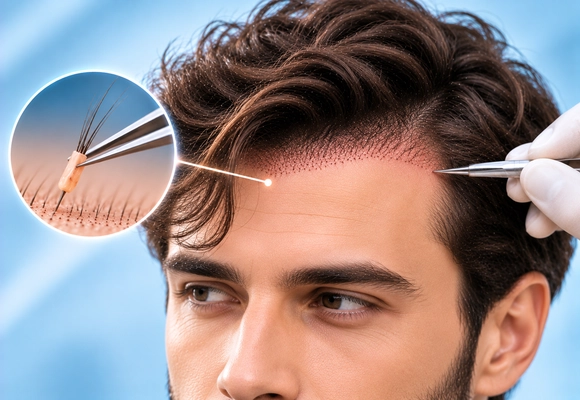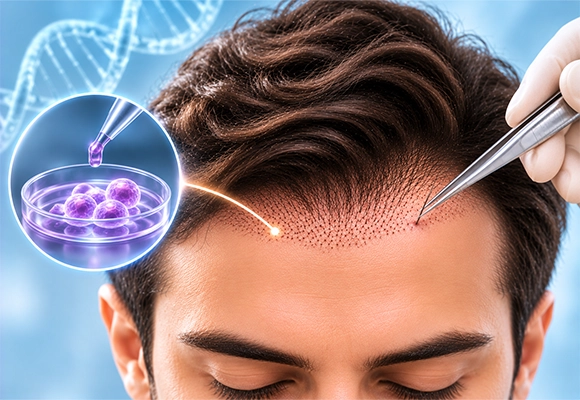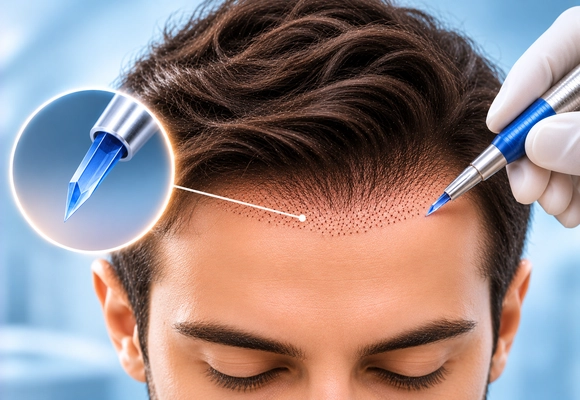
Exosome Hair Transplant

What Is Exosome Hair Transplant in Turkey?
Hair loss can affect the hairline, crown, and overall scalp density, leading many people to explore alternatives to conventional hair transplantation. Alongside established treatments, regenerative medicine researchers are investigating whether cell-derived particles can influence the biological processes involved in hair growth.
For patients considering emerging treatments abroad, exosome hair transplant in Turkey is a term commonly used to describe regenerative hair restoration procedures involving exosome-containing or exosome-derived preparations. Despite the name, these treatments do not necessarily involve transplanting hair follicles.
Exosome therapy remains an investigational approach to hair restoration. Although preliminary studies suggest potential biological effects, there is insufficient high-quality clinical evidence to establish it as a reliable replacement for conventional hair transplantation or approved medical treatments for hair loss.
How Does Exosome Hair Restoration Work?
Hair follicles depend on complex interactions between cells, growth signals, and surrounding scalp tissue. Researchers are studying whether extracellular vesicles can influence these interactions and support follicular activity.
Procedures marketed as exosome hair transplant in Turkey may involve applying or injecting a preparation containing extracellular vesicles into the scalp. However, product composition, delivery methods, and treatment protocols vary considerably. The presence of exosomes does not automatically demonstrate that a preparation can stimulate meaningful hair growth.
What Are Exosomes and How Are They Used in Hair Treatments?
Exosomes are small extracellular vesicles released by cells. They contain biological materials, including proteins, lipids, and nucleic acids, that may participate in communication between cells.
Research associated with exosome hair transplant in Turkey explores whether these vesicles can influence signaling pathways involved in follicle growth and tissue repair. Some preparations are described as being derived from cultured cells, including mesenchymal stromal cells. However, exosomes are not living stem cells, and their biological properties depend on their source, processing, and composition.
Is Exosome Hair Treatment the Same as Hair Transplant Surgery?
Traditional hair transplantation physically relocates viable follicular units from a donor region to areas affected by permanent hair loss. The transplanted follicles can then produce hair in their new location.
By contrast, a procedure advertised as exosome hair transplant in Turkey may involve scalp injections or topical application rather than surgical follicle transfer. Exosome treatment does not directly relocate existing follicles or reliably create new ones. Patients should confirm whether a clinic is offering conventional transplantation, an experimental regenerative procedure, or a combination of both.
Who Is a Good Candidate for Exosome Hair Restoration?
Treatment suitability depends on the cause of hair loss, the condition of the scalp, and the scientific evidence supporting the proposed intervention. A dermatological examination is necessary to distinguish hereditary thinning from inflammatory, nutritional, or other medical causes.
Individuals researching exosome hair transplant in Turkey should understand that there is no universally established candidate profile for this experimental approach. Patients with active scalp disease or unexplained hair loss require appropriate diagnosis and treatment first. Participation in a properly authorized clinical study may be preferable to purchasing an unproven commercial procedure.
What Types of Hair Loss Are Being Studied for Exosome Therapy?
Researchers are particularly interested in androgenetic alopecia, a common condition involving progressive follicular miniaturization. Laboratory investigations have examined how extracellular vesicles might influence hair follicle cells and signaling pathways.
Studies relevant to exosome hair transplant in Turkey have explored potential applications in pattern hair loss, while other hair disorders remain areas of early investigation. However, findings from cell cultures and animal studies cannot be assumed to apply to patients. Different forms of alopecia require different treatments, and evidence for one condition does not establish effectiveness for another.
What Are the Potential Benefits of Exosome Hair Treatments?
Cell-to-cell communication plays an important role in tissue maintenance and follicular activity. Scientists are investigating whether selected extracellular vesicles can influence inflammation, cellular signaling, and the hair growth cycle.
If future clinical research confirms meaningful benefits, treatments currently marketed as exosome hair transplant in Turkey might offer additional options for certain patients with thinning hair. Potential research goals include improving hair density, supporting existing follicles, and enhancing scalp recovery. These possibilities remain investigational and should not be presented as guaranteed clinical results.
What Are the Limitations of Exosome Hair Restoration?
One major limitation is the lack of standardized treatment protocols. Products may differ in cellular origin, purification methods, vesicle concentration, storage conditions, and biological activity.
Patients considering exosome hair transplant in Turkey should be cautious about claims of permanent regrowth or predictable improvements in hair density. Many available studies are small, preliminary, or methodologically limited. Long-term safety, optimal dosing, treatment frequency, and the durability of any benefits remain uncertain.
Can Exosome Therapy Stimulate New Hair Growth?
Hair follicles naturally cycle through active growth, transition, resting, and shedding phases. Researchers are investigating whether extracellular vesicles can influence the signals that regulate these stages.
Some early findings associated with exosome hair transplant in Turkey suggest possible effects on follicular activity, but reliable clinical evidence remains insufficient. Any reported improvement must be evaluated using objective hair measurements and appropriate control groups. Exosome treatment has not been established as a dependable method for generating new hair growth.
Exosome Hair Treatment vs. PRP: Which Has Stronger Clinical Evidence?
Platelet-rich plasma (PRP) is prepared from a patient’s blood and contains concentrated platelets that release various signaling molecules. PRP has been investigated in multiple clinical studies for androgenetic alopecia, although protocols and reported outcomes vary.
Compared with PRP, exosome hair transplant in Turkey generally has a more limited clinical evidence base. Some studies suggest PRP may improve hair density in selected patients, but its results are inconsistent and it is not a guaranteed treatment. Exosome preparations require more rigorous controlled trials before their effectiveness can be meaningfully compared with PRP.
Exosome Therapy vs. Hair Mesotherapy: What Are the Differences?
Hair mesotherapy is a broad term describing scalp injections of substances such as vitamins, amino acids, medications, or other formulations. Its effectiveness depends on the ingredients used, and many marketed combinations lack strong clinical evidence.
Treatments described as exosome hair transplant in Turkey differ because they are intended to deliver extracellular vesicles or products marketed as containing them. Mesotherapy does not necessarily involve exosomes, and neither approach is a standardized replacement for established hair loss treatments. Patients should request the exact ingredients and supporting evidence before undergoing injections.
Exosome Hair Restoration vs. FUE Hair Transplantation
Follicular Unit Extraction (FUE) is an established surgical harvesting method that removes individual follicular units from a donor region. These grafts are then implanted into areas affected by permanent hair loss.
Unlike FUE, exosome hair transplant in Turkey generally refers to a nonsurgical regenerative intervention rather than the relocation of complete follicles. FUE can provide lasting coverage when sufficient healthy donor hair is available, although results are not guaranteed. Exosome therapy has not demonstrated comparable effectiveness for restoring coverage in bald areas.
Exosome Hair Restoration vs. DHI Hair Transplantation
Direct Hair Implantation (DHI) commonly uses a specialized implanter pen to place harvested follicular grafts into the scalp. The follicles are usually collected using FUE extraction techniques.
A treatment marketed as exosome hair transplant in Turkey does not perform the same function as DHI because it does not directly implant viable hair follicles. DHI is a surgical implantation approach, while exosome therapy remains an investigational regenerative treatment. The methods therefore address hair restoration through fundamentally different mechanisms.
Can Exosome Therapy Be Combined with FUE or DHI Hair Transplantation?
Some clinics offer regenerative injections alongside conventional hair transplantation. These additional procedures are often marketed as ways to support healing or improve the appearance of transplanted hair.
When a clinic combines FUE or DHI with exosome hair transplant in Turkey, patients should understand that the exosome component remains investigational. There is insufficient high-quality evidence to establish that adding exosomes consistently improves transplant outcomes. The surgical procedure should be evaluated independently of any optional regenerative treatment.
Can Exosome Treatments Improve Hair Transplant Graft Survival?
Graft survival depends on donor follicle quality, extraction technique, storage conditions, implantation accuracy, and postoperative healing. Protecting follicles from mechanical injury and prolonged exposure outside the body is essential.
Although researchers have explored regenerative approaches associated with exosome hair transplant in Turkey, there is not enough reliable clinical evidence to confirm that exosome injections increase graft survival after FUE or DHI. Claims of guaranteed graft retention or substantially higher survival rates should be supported by rigorous comparative studies.
What Qualifications Should an Exosome Hair Restoration Specialist Have?
Regenerative treatments require an understanding of scalp disorders, injection-related complications, and the limitations of emerging biological products. A medical professional should also be able to explain the procedure’s evidence and regulatory status.
Patients exploring exosome hair transplant in Turkey should seek assessment from an appropriately qualified physician, preferably one experienced in dermatology or hair restoration. The clinician should provide a clear diagnosis, discuss established alternatives, and explain who will perform each stage of treatment. Marketing titles alone do not demonstrate medical competence.
How Can You Verify the Origin and Quality of Exosome Products?
Biological product quality depends on the source material, manufacturing process, purification methods, storage conditions, and contamination controls. Two products marketed as exosomes may contain very different materials.
Before undergoing exosome hair transplant in Turkey, patients should request the product’s manufacturer details, batch information, documented composition, storage requirements, and evidence of appropriate quality testing. They should also ask whether the product is authorized for the proposed use in Turkey. General laboratory certificates or promotional claims do not establish clinical effectiveness or regulatory approval.
What Should International Patients Know Before Traveling to Turkey?
Medical tourism requires careful planning, especially when the proposed procedure is experimental. International patients should understand the treatment’s limitations, possible complications, and arrangements for follow-up after returning home.
Anyone traveling for exosome hair transplant in Turkey should verify the healthcare facility’s authorization, the treating physician’s credentials, and the regulatory status of the proposed product. Written informed consent should explain the investigational nature of treatment where applicable. Patients should also consider how complications or delayed reactions would be managed after leaving Turkey.
What Is Included in an Exosome Hair Treatment Package in Turkey?
Treatment packages vary between providers and may combine medical consultations with scalp procedures, laboratory services, or additional hair restoration treatments. Some clinics also advertise accommodation and transportation as part of their medical tourism services.
A package marketed as exosome hair transplant in Turkey should clearly identify the biological product, treatment method, number of sessions, physician involvement, and postoperative follow-up. Patients should ask whether consultations, medications, additional injections, and complication management involve separate charges. The inclusion of travel services does not indicate that the treatment is medically effective.
Exosome Hair Transplant in Turkey Prices 2026
In 2026, the cost of exosome hair transplant in Turkey varies according to the product being offered, its source and processing method, the number of sessions, and the healthcare facility’s pricing structure.
Frequently Asked Questions
Does Exosome Hair Treatment Really Work?
Some laboratory and early clinical studies suggest that certain extracellular vesicle preparations may influence hair follicle activity. However, procedures marketed as exosome hair transplant in Turkey have not been established as consistently effective treatments for hair loss. Larger, well-controlled clinical trials are needed to determine whether the reported benefits are meaningful and durable.
Can Exosomes Grow New Hair Follicles?
Creating a new functional hair follicle requires complex interactions between multiple cell types and biological signals. Although research related to exosome hair transplant in Turkey investigates these processes, exosome therapy has not been shown to reliably generate entirely new follicles in humans. Supporting an existing follicle is different from creating a new one.
Is Exosome Hair Transplantation Available in Turkey?
Some Turkish clinics advertise exosome-based or exosome-related hair restoration procedures. However, the availability of a service marketed as exosome hair transplant in Turkey does not establish that the product is approved for hair loss or supported by strong clinical evidence. Patients should verify the exact preparation, its origin, and its authorization for the proposed use.
Is Exosome Therapy an Approved Hair Loss Treatment?
Regulatory requirements differ according to the product, manufacturing process, intended use, and country. A procedure advertised as exosome hair transplant in Turkey should not be assumed to have authorization specifically for treating hair loss. Exosome-based hair restoration is not an established, routinely approved treatment for androgenetic alopecia, and patients should request verification from the relevant health authorities.
Are Exosome Hair Treatments Considered Experimental?
Many applications of extracellular vesicles in regenerative medicine remain under clinical investigation. Despite commercial marketing, exosome hair transplant in Turkey should be approached as an experimental hair restoration option unless the exact product and indication have established regulatory authorization and adequate supporting evidence. The term regenerative does not mean a treatment has been proven effective.
Is Exosome Hair Therapy Safe?
Potential complications depend on the preparation’s origin, purity, manufacturing quality, and method of administration. Procedures marketed as exosome hair transplant in Turkey may carry risks of infection, inflammation, allergic reactions, contamination, and injection-related injury. Long-term safety data remain limited for many exosome preparations used in hair restoration.
What Is the Success Rate of Exosome Hair Treatment?
Clinical studies use different products, treatment protocols, patient populations, and methods of measuring hair growth. As a result, exosome hair transplant in Turkey does not have a universally established or scientifically validated success rate. Patients should be cautious about fixed percentages or promises of guaranteed regrowth.
Can Exosomes Restore Hair in Completely Bald Areas?
Completely bald regions may contain few or no viable follicles capable of producing visible hair. Current procedures promoted as exosome hair transplant in Turkey have not been shown to reliably create new follicles in these areas. Conventional hair transplantation may be more appropriate when adequate donor follicles are available.
Can Exosome Therapy Reverse Male Pattern Baldness?
Male pattern baldness, or androgenetic alopecia, involves genetically influenced follicular miniaturization and sensitivity to androgens. Experimental treatments described as exosome hair transplant in Turkey have not been proven to reverse the underlying genetic process or permanently stop its progression. Patients should discuss evidence-based options, including minoxidil, appropriately prescribed finasteride, and conventional transplantation, with a qualified physician.