Motor Operated and Manual Hair Transplant
What Is Motor Operated and Manual Hair Transplant?
Hair transplantation requires careful extraction of healthy follicles from the donor scalp before they can be implanted into thinning or bald areas. Surgeons may use different instruments to perform this extraction, depending on the patient’s follicular anatomy and the planned procedure.
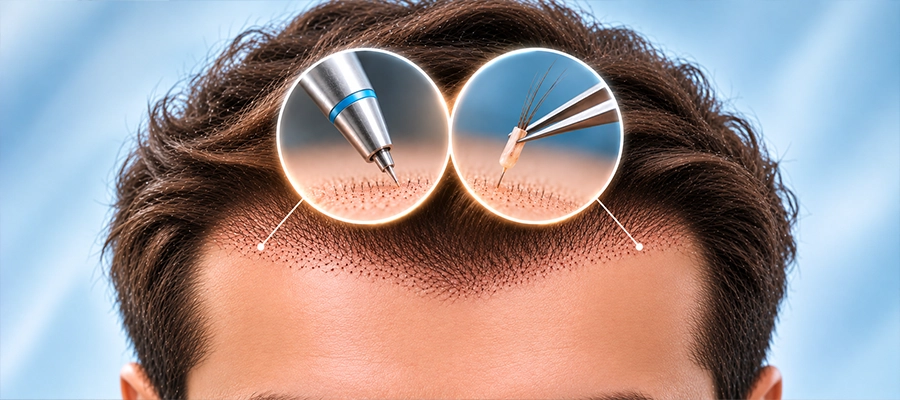
In modern hair restoration, motor operated and manual hair transplant methods describe two approaches to Follicular Unit Extraction (FUE). Motor-operated FUE uses a powered punch device, while manual FUE relies on a hand-operated instrument to separate individual follicular units from surrounding tissue.
Both methods aim to preserve healthy follicles for transplantation. The choice between them depends on donor characteristics, surgical experience, and the precision of extraction rather than the assumption that one technique is always superior.
How Do Motor Operated and Manual Hair Transplant Techniques Work?
Both techniques begin with an examination of the donor area, followed by the selection of suitable follicular units for extraction. Local anesthesia is typically administered to minimize discomfort during the procedure.
During a motor operated and manual hair transplant, the surgeon uses either a powered or hand-controlled punch to separate follicular units from the surrounding scalp tissue. The grafts are then carefully removed, prepared, and implanted into the recipient area. The main difference lies in how the extraction punch is operated.
What Is Motor Operated FUE Hair Transplantation?
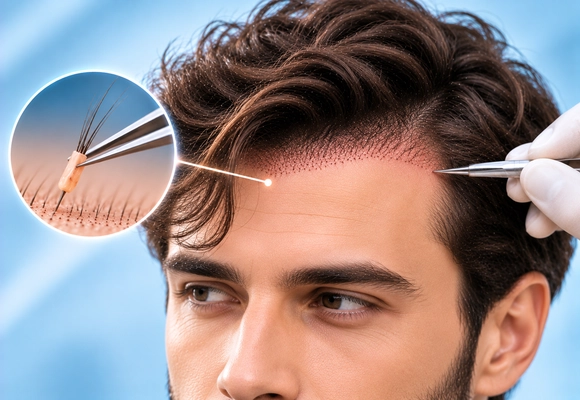
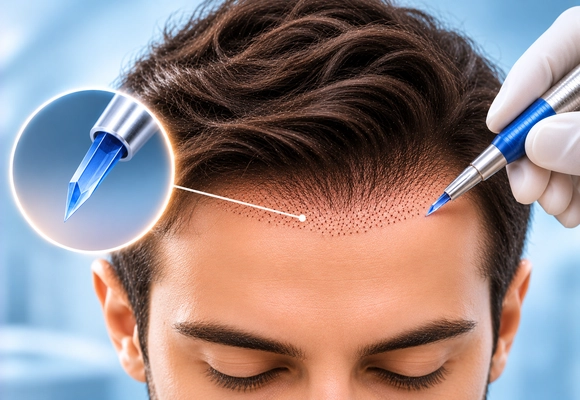
Motor-operated FUE uses an electrically powered or battery-operated device to rotate or oscillate a small extraction punch. The surgeon controls the instrument’s positioning while the motor assists with movement.
In a motor operated and manual hair transplant comparison, motorized extraction may allow efficient harvesting of numerous grafts during larger sessions. However, instrument speed, punch size, and extraction depth must be carefully adjusted. Excessive force or incorrect alignment can damage follicles and surrounding tissue.
What Is Manual FUE Hair Transplantation?
Manual FUE involves using a hand-operated punch to create a small circular incision around each follicular unit. The surgeon controls the movement directly without relying on a powered motor.
Within motor operated and manual hair transplant procedures, manual extraction may provide tactile feedback that some surgeons find useful when working with particular follicular characteristics. However, the method can be time-consuming and requires considerable technical skill. Manual operation alone does not guarantee more accurate extraction.
Who Is a Good Candidate for Motor Operated and Manual Hair Transplantation?
Suitability for FUE depends on the underlying cause of hair loss, the stability of donor follicles, and the patient’s overall scalp condition. Individuals with androgenetic alopecia and adequate donor reserves are often considered for surgical restoration.
Before selecting a motor operated and manual hair transplant approach, a qualified physician should assess donor density, hair shaft thickness, follicular curvature, and expected future thinning. Patients with active scalp inflammation, insufficient donor hair, or diffuse donor miniaturization may require alternative treatment.
What Types of Hair Loss Can These Techniques Treat?
Follicular Unit Extraction is commonly used for selected forms of permanent hair loss. The choice between powered and manual extraction does not change the underlying medical indications for transplantation.
For suitable patients, motor operated and manual hair transplant techniques may help restore coverage affected by androgenetic alopecia, stable hairline recession, or certain mature scars. However, temporary shedding, active alopecia areata, and uncontrolled scarring alopecia generally require medical management rather than immediate surgery.
What Are the Main Differences Between Motor Operated and Manual FUE?
The primary distinction concerns the mechanism used to move the extraction punch. Motor-operated instruments use powered rotation or oscillation, while manual punches depend entirely on the surgeon’s hand movements.
When comparing motor operated and manual hair transplant methods, differences may include extraction speed, tactile feedback, instrument settings, and operator preference. Both approaches can harvest healthy follicular units when performed correctly. Neither has been established as universally superior for graft survival or long-term density.
What Are the Advantages of Motor Operated Hair Transplantation?
Powered extraction devices can reduce the amount of repeated manual rotation required during follicular harvesting. This may improve procedural efficiency when a large number of grafts are needed.
During a motor operated and manual hair transplant assessment, motorized FUE may be preferred for suitable patients requiring extensive extraction. Adjustable instrument settings can also help surgeons adapt to different follicular characteristics. However, faster harvesting should never take priority over graft quality and donor preservation.
What Are the Benefits of Manual Hair Transplantation?
Hand-operated punches allow surgeons to control instrument movement directly throughout follicular separation. Some practitioners prefer this approach when working with challenging extraction angles or selected donor characteristics.
In a motor operated and manual hair transplant procedure, manual FUE may offer useful tactile feedback and controlled movements in experienced hands. Nevertheless, these potential advantages depend on operator skill. Manual extraction is not inherently safer or more effective for every patient.
What Are the Limitations of Motor Operated and Manual FUE?
Both extraction methods carry risks of follicular transection, donor-area scarring, and excessive harvesting. The number of grafts available for transplantation remains limited by the patient’s donor density and follicular stability.
Patients considering a motor operated and manual hair transplant should understand that neither technique prevents future hereditary hair loss or guarantees complete graft survival. Manual harvesting may require additional time, while poorly controlled motorized extraction can increase tissue trauma. Surgical planning and instrument handling remain essential.
Which Hair Extraction Method Is Better for Different Hair Types?
Hair characteristics vary in thickness, curl pattern, follicular depth, and the direction of growth beneath the scalp. These differences can influence how easily follicular units are extracted.
When choosing a motor operated and manual hair transplant method, surgeons should consider the patient’s individual follicular anatomy rather than visible hair texture alone. Curved follicles may require specialized punches or modified extraction techniques. Both manual and motorized systems can be appropriate when operated by an experienced professional.
How Does Hair Follicle Anatomy Affect the Choice of Extraction Method?
Hair follicles do not always grow in straight lines beneath the scalp. Their angle, curvature, and depth can vary between patients and even across different donor regions.
For a successful motor operated and manual hair transplant, the extraction punch must follow the follicular unit’s path as closely as possible. Incorrect alignment can cut through follicles and reduce graft quality. Surgeons may adjust punch diameter, movement, and extraction technique according to the anatomy observed during harvesting.
What Is a Micromotor Device in Hair Transplantation?
A micromotor is a powered surgical instrument designed to operate small extraction punches. Depending on the device, it may provide adjustable rotation speeds, oscillation, or other movement settings.
In motor operated and manual hair transplant procedures, a micromotor allows the surgeon to perform FUE harvesting with powered assistance. However, the device does not independently identify the safest extraction path or guarantee healthy grafts. Accurate positioning, appropriate settings, and medical supervision remain necessary.
Motor Operated and Manual Hair Transplant Prices 2026
In 2026, the cost of a motor operated and manual hair transplant varies according to the number of grafts required, the selected extraction approach, the surgeon’s experience, and the healthcare facility.
Frequently Asked Questions
Is Manual FUE Better Than Motor Operated FUE?
Neither extraction method has been established as universally superior. When comparing motor operated and manual hair transplant techniques, graft quality depends on instrument selection, follicular anatomy, and surgical skill. The best approach varies between patients and operators.
Is Motor Operated Hair Transplantation Safe?
Motorized FUE is an established approach to follicular extraction when performed appropriately. During a motor operated and manual hair transplant, both powered and hand-operated instruments carry risks of follicular injury, bleeding, and scarring. Qualified medical supervision and careful donor management are essential.
Is Manual Hair Transplantation More Precise?
Manual punches provide direct tactile feedback that some surgeons find useful during extraction. However, a motor operated and manual hair transplant comparison does not establish that hand-operated instruments are consistently more precise. Accuracy depends on follicular alignment, instrument characteristics, and operator experience.
Is Motor Operated FUE Faster Than Manual FUE?
Powered punches may allow faster extraction during suitable procedures, particularly when many grafts are required. In a motor operated and manual hair transplant, overall surgical time also depends on donor characteristics, graft preparation, and implantation. Speed should not compromise follicle quality.
Is Manual FUE More Painful Than Motor Operated FUE?
Local anesthesia is generally used for both extraction approaches. Patients undergoing a motor operated and manual hair transplant may experience brief discomfort during anesthetic injections and temporary tenderness afterward. Pain levels are influenced more by anesthesia, tissue handling, and individual sensitivity than by the extraction mechanism alone.
Does Manual FUE Cause Less Damage to Hair Follicles?
Follicular damage can occur with either hand-operated or powered punches. During a motor operated and manual hair transplant, transection risk depends on extraction angle, punch size, follicular curvature, and surgical technique. There is insufficient evidence to conclude that manual extraction consistently causes less damage in every patient.
Does Motor Operated FUE Leave More Scars?
Both techniques create small extraction wounds that heal with some degree of scarring. Following a motor operated and manual hair transplant, scar visibility depends on punch size, extraction density, healing characteristics, and surgical technique. Motorized operation alone does not necessarily produce more visible scars.
Which Technique Has a Higher Graft Survival Rate?
Graft survival depends on the entire transplantation process, including extraction, handling, storage, implantation, and healing. There is no universally established survival advantage for either approach in a motor operated and manual hair transplant comparison. Patients should be cautious about guaranteed success percentages.
Is Manual FUE Better for Thin or Fine Hair?
Fine hair may require careful instrument selection and precise extraction because follicles can be delicate. In selected cases, a motor operated and manual hair transplant assessment may favor manual punches, but this is not a universal rule. Surgeon experience and individual follicular anatomy are more important than hair thickness alone.
Is Motor Operated FUE Suitable for Thick Hair?
Thicker hair can often be harvested successfully using appropriately selected motorized extraction instruments. During a motor operated and manual hair transplant, punch diameter and operating settings should be adapted to the patient’s follicular characteristics. Thick hair does not automatically make motorized FUE the best option.