Sapphire Hair Transplant
What Is Sapphire Hair Transplant in Turkey?
Hair loss can gradually change the hairline, reduce scalp coverage, and affect overall hair density. Modern hair transplantation techniques aim to restore coverage by moving healthy follicles from a suitable donor area to regions affected by permanent thinning.
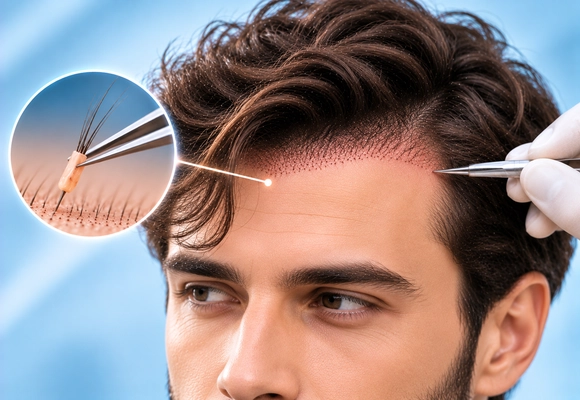
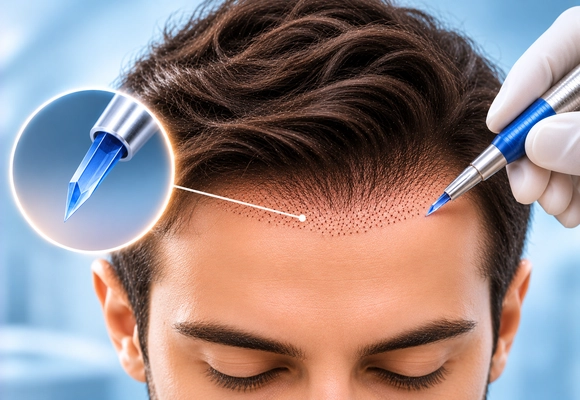
For patients exploring hair restoration abroad, sapphire hair transplant in Turkey refers to a variation of Follicular Unit Extraction (FUE) in which sapphire-tipped blades are used to create recipient channels before graft implantation. The follicles are typically harvested using standard FUE extraction instruments.
Sapphire FUE is not an entirely separate hair transplantation method. Its main distinction concerns the material used to prepare recipient sites. The success of the procedure depends primarily on the patient’s donor hair, surgical planning, graft handling, and the experience of the medical team.
How Does Sapphire Hair Transplantation Work?
Hair transplantation involves extracting viable follicular units and placing them into areas affected by hair loss. Each stage requires careful attention to follicle preservation and the natural direction of hair growth.
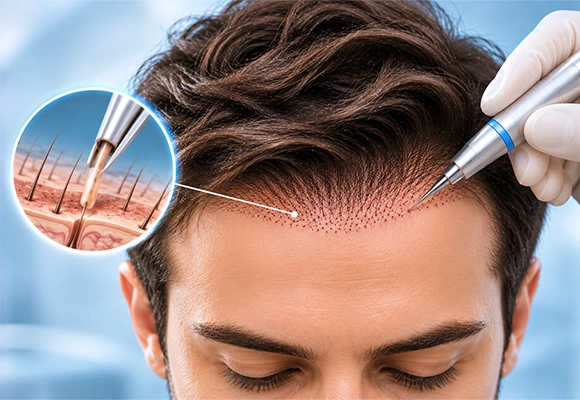
During a sapphire hair transplant in Turkey, the medical team generally extracts individual grafts from the donor region using FUE punches. The surgeon then prepares recipient channels with sapphire-tipped blades and places the grafts into these openings. Local anesthesia is commonly used to reduce discomfort throughout the procedure.
What Is the Sapphire FUE Hair Transplant Technique?
Follicular Unit Extraction is a method of harvesting individual hair follicle groups without removing a continuous strip of scalp tissue. Different instruments can then be used to prepare the recipient area.
In a sapphire hair transplant in Turkey, the term sapphire FUE describes the use of sapphire blades during recipient channel creation. The extraction process remains based on FUE principles. Sapphire instruments do not change the biological characteristics of transplanted follicles or guarantee superior graft survival.
What Are Sapphire Blades Used for in Hair Transplantation?
Recipient channels must accommodate follicular grafts at appropriate angles, depths, and directions. The instruments used to create these openings influence how the surgical team prepares the implantation area.
During a sapphire hair transplant in Turkey, sapphire-tipped blades are used to make recipient incisions before graft placement. Their shape and dimensions may support precise channel preparation when used appropriately. However, accurate placement depends on surgical technique rather than blade material alone.
Who Is a Good Candidate for Sapphire Hair Transplantation?
The suitability of a hair transplant depends on the cause of hair loss, donor density, scalp health, and long-term expectations. Patients with stable androgenetic alopecia and sufficient donor follicles may be appropriate candidates.
Before recommending a sapphire hair transplant in Turkey, a qualified physician should evaluate the extent of thinning, hair shaft characteristics, medical history, and likely future hair loss. Patients with active scalp inflammation, uncontrolled medical conditions, or insufficient donor reserves may require alternative treatment.
What Types of Hair Loss Can Sapphire FUE Treat?
Permanent hair loss can result from hereditary follicular miniaturization, certain injuries, and some stable scarring conditions. Surgical restoration is most commonly performed for androgenetic alopecia.
For selected patients, a sapphire hair transplant in Turkey may improve coverage in the hairline, temples, or crown. Some mature scars may also be considered for transplantation after medical assessment. However, temporary shedding and active inflammatory hair loss disorders generally require diagnosis and treatment before surgery.
What Are the Benefits of Sapphire Hair Transplantation?
Precise recipient-site preparation is important for achieving natural hair direction and appropriate graft distribution. Sapphire blades are designed for creating controlled incisions during the implantation stage.
When performed by an experienced surgical team, a sapphire hair transplant in Turkey can provide natural-looking coverage and avoid the long linear donor scar associated with strip harvesting. Some clinics also promote reduced tissue trauma, but claims of consistently faster healing or greater density compared with steel blades are not firmly established.
What Are the Disadvantages and Limitations of Sapphire FUE?
Every hair transplant is limited by the available donor follicles and the patient’s ongoing pattern of hair loss. Changing the blade material cannot overcome insufficient donor density or prevent hereditary thinning.
Patients considering a sapphire hair transplant in Turkey should understand that the procedure still involves surgical incisions, healing time, and potential complications. Excessive graft harvesting, poor channel placement, infection, and inadequate graft growth remain possible. Sapphire blades do not eliminate these risks.
Sapphire FUE vs. Traditional FUE: What Are the Differences?
Traditional FUE and sapphire FUE generally use the same fundamental method for harvesting individual follicular units. Their main difference is the instrument used to create recipient channels.
In a sapphire hair transplant in Turkey, sapphire-tipped blades replace certain conventional steel blades during recipient-site preparation. Both approaches can achieve natural results when performed correctly. There is no reliable evidence that sapphire blades consistently produce better outcomes for every patient.
Sapphire FUE vs. DHI: Which Hair Transplant Method Is Better?
Hair restoration techniques can differ in how grafts are inserted into the recipient scalp. Sapphire FUE typically involves preparing channels before implantation, while Direct Hair Implantation (DHI) commonly uses an implanter pen.
When comparing DHI with a sapphire hair transplant in Turkey, neither method is automatically superior for graft survival, density, or natural appearance. DHI procedures also frequently use FUE for follicle harvesting. The preferred implantation approach depends on the recipient area, graft characteristics, and the surgical team’s experience.
How Do Sapphire Blades Compare to Steel Blades?
Both sapphire and steel blades can be manufactured in different shapes and sizes for preparing recipient sites. Their performance depends on instrument design, sharpness, and how they are used during surgery.
In a sapphire hair transplant in Turkey, sapphire blades are selected as an alternative to conventional steel instruments. Although they may have different physical properties, this does not automatically translate into less scarring, faster recovery, or higher graft survival. Surgical precision remains the more important factor.
Is Sapphire Hair Transplantation More Effective Than Traditional FUE?
Hair transplant effectiveness is influenced by donor quality, follicle handling, implantation accuracy, and postoperative healing. The material of the recipient-site blade represents only one part of this process.
A properly performed sapphire hair transplant in Turkey may produce results comparable to conventional FUE. However, strong clinical evidence demonstrating consistent superiority is lacking. Patients should prioritize medical expertise and individualized planning over claims that one blade material guarantees better results.
How Natural Do Sapphire Hair Transplant Results Look?
A natural-looking hair transplant requires careful hairline design and appropriate distribution of grafts with different hair counts. Hair direction, angle, and density must also match the surrounding hair.
With suitable planning, a sapphire hair transplant in Turkey can create a hairline that blends with the patient’s existing hairstyle. However, unnatural results may occur if grafts are placed at incorrect angles or excessive density is attempted. The appearance depends on surgical technique rather than sapphire blades alone.
Are Sapphire Hair Transplant Results Permanent?
Transplanted follicles from stable donor regions often retain their relative resistance to androgenetic hair loss after relocation. This can allow transplanted hair to continue growing for many years.
Following a sapphire hair transplant in Turkey, transplanted follicles may provide long-lasting coverage, but permanent results cannot be guaranteed for every individual. Native hair may continue thinning, and some transplanted follicles may also be affected by aging or disease. Long-term treatment planning is therefore important.
Sapphire Hair Transplant in Turkey Prices 2026
In 2026, the cost of a sapphire hair transplant in Turkey varies according to the required graft count, clinic facilities, surgical team experience, and services included in the treatment package.
Frequently Asked Questions
Is Sapphire Hair Transplantation Safe in Turkey?
Hair transplantation is a surgical procedure that carries risks such as infection, bleeding, scarring, and poor graft growth. A properly performed sapphire hair transplant in Turkey can be safe in an appropriately equipped medical facility with qualified supervision. Patients should verify physician credentials, clinic authorization, and postoperative care arrangements.
Is Sapphire FUE Better Than Regular FUE?
Both methods use individual follicular extraction and can achieve natural-looking results. Although a sapphire hair transplant in Turkey uses sapphire-tipped blades for recipient-site preparation, this does not guarantee higher graft survival or faster healing. The better option depends on surgical planning and the patient’s needs.
Is Sapphire FUE Better Than DHI?
Sapphire FUE and DHI differ mainly in their implantation workflows. A sapphire hair transplant in Turkey generally uses pre-created recipient channels, while DHI commonly places grafts with an implanter pen. Neither approach has been established as universally superior.
Is Sapphire Hair Transplantation Painful?
Local anesthesia is commonly administered to numb the donor and recipient areas during surgery. Patients undergoing a sapphire hair transplant in Turkey may experience brief discomfort during anesthetic injections and temporary scalp tenderness afterward. Severe or worsening pain should be reported to the treating physician.
What Is the Success Rate of Sapphire FUE Hair Transplantation?
Graft survival depends on extraction quality, handling, implantation, donor characteristics, and postoperative healing. Although clinics may advertise high success percentages, a sapphire hair transplant in Turkey does not have one universally guaranteed success rate. Patients should be cautious about claims of complete graft survival or guaranteed density.
Does Sapphire FUE Leave Permanent Scars?
Individual follicular extraction creates small donor-area wounds that heal with tiny scars. Therefore, a sapphire hair transplant in Turkey is not completely scar-free, even though it avoids the long linear scar associated with FUT. Scar visibility depends on extraction density, hair length, skin characteristics, and healing.
Is Sapphire Hair Transplantation Suitable for Advanced Baldness?
Extensive hair loss may require more grafts than the donor region can safely provide. In selected patients, a sapphire hair transplant in Turkey may improve coverage in priority areas such as the frontal hairline. However, full restoration of youthful density may not be possible, and additional treatment may be necessary.
What Is the Best Age for a Sapphire Hair Transplant?
Hair loss patterns can continue changing throughout adulthood, particularly in younger patients. A carefully planned sapphire hair transplant in Turkey should consider the stability of hair loss, donor reserves, and future thinning rather than age alone. There is no single ideal age for every patient.