Percutaneous Hair Transplantation
What Is Percutaneous Hair Transplantation?
Hair transplantation involves more than extracting healthy follicles from a donor area. The preparation of recipient sites also plays an important role in determining how transplanted hair grows, including its direction, angle, and distribution.
In modern hair restoration, percutaneous hair transplantation generally refers to a technique in which small recipient openings are created using needle-like instruments before follicular grafts are implanted. The term primarily describes a method of preparing the recipient area rather than an entirely separate way of extracting hair follicles.
Although some clinics promote percutaneous transplantation as an advanced alternative to conventional methods, its effectiveness depends on surgical planning, instrument selection, graft handling, and the experience of the medical team. No recipient-channel technique guarantees superior results for every patient.
How Does Percutaneous Hair Transplantation Work?
The procedure begins with an examination of the scalp, donor hair quality, and areas requiring additional coverage. The surgeon determines the number of grafts needed and plans their distribution across the recipient region.
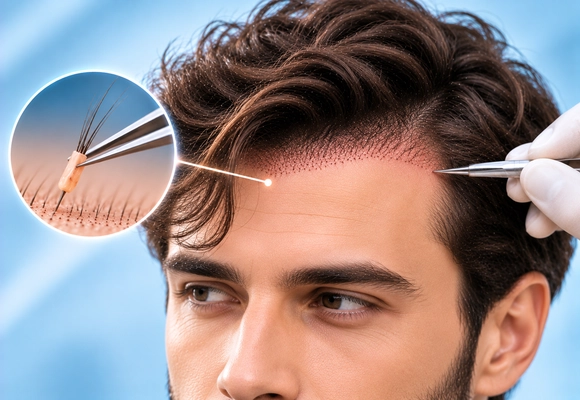
During percutaneous hair transplantation, follicles are commonly harvested using Follicular Unit Extraction (FUE). The surgeon then creates small recipient openings with suitable needle-like instruments and places the prepared grafts into these sites. Local anesthesia is generally used throughout the procedure.
What Is the Percutaneous Hair Transplant Technique?
Percutaneous refers to a procedure performed through the skin. In hair transplantation, the term is commonly used to describe recipient-site preparation using small needles or similar instruments.
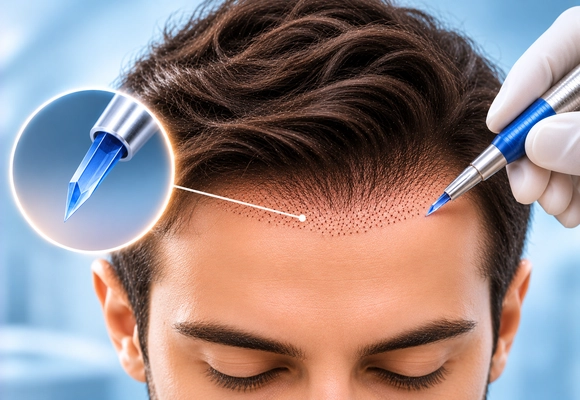
A clinic offering percutaneous hair transplantation may use specialized needles to create openings that accommodate individual follicular units. The exact instruments and surgical protocols can differ between providers. Patients should ask how the recipient sites are created and whether the technique offers any clinically demonstrated advantage over established alternatives.
Who Is a Good Candidate for Percutaneous Hair Transplantation?
Surgical suitability depends on the underlying cause of hair loss, the stability of the donor region, and the condition of the scalp. Individuals with androgenetic alopecia and adequate donor reserves may be appropriate candidates.
Before recommending percutaneous hair transplantation, a qualified physician should assess hair density, follicular characteristics, scalp health, and expected future thinning. Patients with active inflammatory scalp disorders, insufficient donor hair, or diffuse donor miniaturization may not be suitable for surgery.
What Types of Hair Loss Can Percutaneous Hair Transplantation Treat?
Hair transplantation is generally considered for permanent hair loss when healthy donor follicles remain available. The recipient-site preparation method does not change which underlying disorders are appropriate for surgery.
For selected patients, percutaneous hair transplantation may improve coverage affected by androgenetic alopecia, stable hairline recession, or certain mature scars. However, temporary shedding, active alopecia areata, and uncontrolled scarring alopecia usually require medical treatment rather than immediate transplantation.
What Are the Benefits of Percutaneous Hair Transplantation?
Carefully prepared recipient sites allow the surgeon to plan the placement of individual grafts. Their size, spacing, and orientation can influence the final appearance of transplanted hair.
When performed appropriately, percutaneous hair transplantation may support precise graft distribution and natural-looking hair direction. Needle-based recipient openings can be adapted to different follicular unit sizes. However, these potential advantages depend on surgical technique and have not been established as universally superior to other recipient-site methods.
What Are the Limitations of the Percutaneous Hair Transplant Method?
Recipient-site preparation cannot compensate for poor donor quality, damaged grafts, or inadequate surgical planning. The number of available follicles remains a fundamental limitation of every hair transplant procedure.
Patients considering percutaneous hair transplantation should also understand that bleeding, swelling, infection, scarring, and poor graft growth remain possible. Incorrect channel depth, angle, or spacing may compromise graft placement. The technique does not prevent the continued progression of hereditary hair loss.
What Is the Difference Between Percutaneous Hair Transplantation and Traditional FUE?
Follicular Unit Extraction describes the process of harvesting individual follicular units from a donor region. After extraction, the grafts must be implanted into recipient sites using an appropriate method.
By comparison, percutaneous hair transplantation generally refers to preparing those recipient sites with needle-like instruments. The two techniques can therefore be used together rather than being direct alternatives. FUE determines how follicles are harvested, while percutaneous channel creation concerns how the recipient area is prepared.
Percutaneous Hair Transplant vs. Sapphire FUE: What Are the Differences?
Sapphire FUE typically involves using sapphire-tipped blades to create recipient channels after follicular units have been harvested. Despite the name, sapphire blades are generally not used to extract donor follicles.
In contrast, percutaneous hair transplantation commonly uses needle-like instruments for recipient-site preparation. Both approaches aim to create suitable openings for graft placement. Current evidence does not establish that either method consistently produces better graft survival, faster healing, or higher final density.
Percutaneous Hair Transplant vs. DHI: Which Method Is More Suitable?
Direct Hair Implantation (DHI) commonly uses a specialized implanter pen to insert harvested follicles into the scalp. The device can create an opening and place the graft during the implantation process.
With percutaneous hair transplantation, recipient sites are generally prepared before the grafts are inserted. Both approaches can be combined with FUE harvesting, and neither is automatically superior. The appropriate method depends on graft characteristics, recipient-area requirements, and surgical expertise.
How Are Recipient Channels Created in Percutaneous Hair Transplantation?
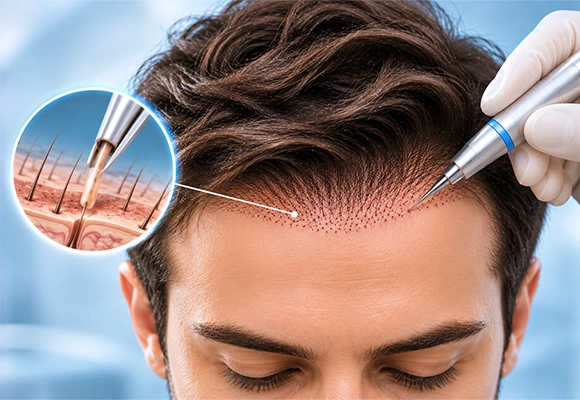
Recipient channels are small openings that accommodate transplanted follicular units. Their depth, angle, direction, and spacing must be planned according to the patient’s scalp anatomy and existing hair pattern.
During percutaneous hair transplantation, the surgeon uses appropriately selected needle-like instruments to create these openings. The channels should accommodate the grafts without excessive compression or unnecessary tissue trauma. Poorly positioned recipient sites can affect hair direction and the natural appearance of the result.
What Instruments Are Used for Percutaneous Hair Transplantation?
Instrument selection depends on follicular unit size, scalp characteristics, and the surgeon’s preferred technique. Recipient-site preparation may involve fine needles or other specialized tools designed to create controlled openings.
In percutaneous hair transplantation, these instruments are used alongside conventional extraction punches, graft-handling tools, and surgical equipment. The medical team must select appropriate sizes and maintain sterile conditions. Instrument quality matters, but the material or shape of a tool does not independently guarantee better results.
How Does Percutaneous Channel Opening Affect Graft Placement?
The recipient-site design determines where follicles are implanted and influences the direction in which transplanted hair emerges. Small differences in angle and spacing can affect the appearance of density and hairline naturalness.
During percutaneous hair transplantation, careful channel preparation may help the surgeon position grafts according to the surrounding hair pattern. However, overly narrow openings can compress follicles, while excessive depth or poor alignment can cause injury. Successful placement requires accurate planning and gentle graft handling.
How Is the Donor Area Evaluated for Percutaneous Hair Transplantation?
Donor assessment establishes how many follicles can be safely harvested without creating excessive thinning. Hair density, shaft thickness, follicular stability, and the expected progression of hair loss all influence this evaluation.
Before percutaneous hair transplantation, the physician should examine the donor region and assess the quality of available grafts. Trichoscopy may help identify miniaturization or other concerning changes. The recipient-channel method does not increase the number of follicles available for harvesting.
How Many Grafts Are Needed for a Percutaneous Hair Transplant?
Graft requirements depend on the size of the thinning area, existing hair coverage, hair characteristics, and the desired density. Small hairline corrections usually require fewer grafts than extensive frontal and crown restoration.
For patients undergoing percutaneous hair transplantation, the graft count should be determined through individualized surgical planning. Donor reserves must be preserved for possible future hair loss. Promises of unlimited grafts or guaranteed density should be treated cautiously.
Percutaneous Hair Transplantation Prices 2026
In 2026, the cost of percutaneous hair transplantation varies according to the number of grafts required, the surgeon’s experience, the healthcare facility, and the instruments used for recipient-site preparation.
Frequently Asked Questions
Is Percutaneous Hair Transplantation a Separate Technique from FUE?
FUE refers to the extraction of individual follicular units from the donor region. By contrast, percutaneous hair transplantation generally describes recipient-site preparation using needle-like instruments. The two methods can be used together during the same procedure.
Is Percutaneous Hair Transplantation Better Than Traditional FUE?
These terms describe different stages of hair transplantation, making a direct comparison misleading. Although percutaneous hair transplantation may involve precise recipient-channel preparation, it has not been established as universally superior to conventional FUE-based procedures. Results depend on the complete surgical process.
Is Percutaneous Hair Transplantation Better Than Sapphire FUE?
Both approaches may be used to prepare recipient sites, but they generally involve different instruments. Current evidence does not demonstrate that percutaneous hair transplantation consistently produces better graft survival or final density than sapphire-assisted channel creation. The surgeon’s technique and patient characteristics remain more important than the instrument label.
Is Percutaneous Hair Transplantation Safe?
Hair transplantation carries risks including bleeding, infection, swelling, scarring, and follicular damage. When appropriately performed, percutaneous hair transplantation can be safe in a suitable medical setting with qualified surgical supervision. Patients should verify clinic standards and postoperative care arrangements.
Is Percutaneous Hair Transplantation Painful?
Local anesthesia is generally used to numb the donor and recipient areas during surgery. Patients undergoing percutaneous hair transplantation may experience brief discomfort during anesthetic injections and mild tenderness afterward. Severe or worsening pain should be assessed by the treating physician.
What Is the Success Rate of Percutaneous Hair Transplantation?
Graft survival depends on follicle quality, extraction accuracy, storage, implantation, and postoperative healing. There is no universally guaranteed success rate specifically established for percutaneous hair transplantation. Patients should be cautious about clinics promising complete graft survival or fixed density outcomes.
Does Percutaneous Hair Transplantation Leave Visible Scars?
All surgical follicle harvesting and implantation methods create small wounds that heal with some degree of scarring. Following percutaneous hair transplantation, FUE harvesting may leave tiny circular donor scars, while recipient openings can also produce subtle marks. Scar visibility depends on technique, healing, and individual skin characteristics.
Is Percutaneous Hair Transplantation Suitable for Advanced Baldness?
Extensive baldness often requires a large number of grafts and careful donor management. For selected patients, percutaneous hair transplantation may provide coverage when sufficient healthy donor follicles are available. However, the recipient-channel technique cannot overcome severe donor limitations or guarantee full restoration.
What Is the Best Age for Percutaneous Hair Transplantation?
Hair loss patterns may continue evolving throughout adulthood, particularly in younger patients. A carefully planned percutaneous hair transplantation procedure should consider the stability of thinning, donor reserves, and future hair loss rather than age alone. There is no universally ideal age for every patient.