Gold-FUE Hair Transplantation
What Is Gold-FUE Hair Transplantation?
Hair transplantation has evolved through improvements in surgical instruments, follicular extraction methods, and implantation techniques. Alongside established procedures, some clinics advertise specialized variations using terms such as Gold-FUE to distinguish their services.
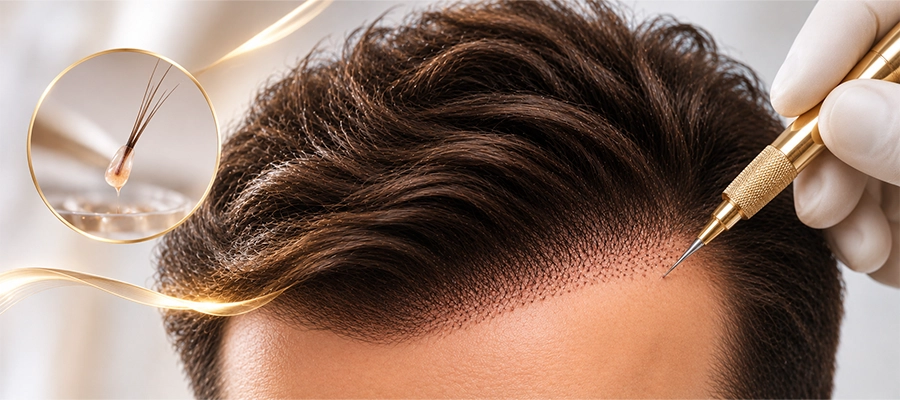
In the hair restoration industry, Gold-FUE hair transplantation generally refers to a marketed variation of Follicular Unit Extraction (FUE), sometimes associated with gold-coated instruments or specialized surgical equipment. However, Gold-FUE is not a universally standardized or independently recognized hair transplantation technique.
The underlying procedure typically follows the same principles as conventional FUE: healthy follicles are harvested from a donor area and implanted into regions affected by permanent hair loss. Patients should understand exactly what a clinic means by Gold-FUE before assuming that the name represents a scientifically proven advancement.
How Does Gold-FUE Hair Transplantation Work?
The procedure begins with an examination of the scalp, donor hair density, and areas requiring restoration. A surgeon evaluates the patient’s hair loss pattern and determines how many follicular grafts can be safely harvested.
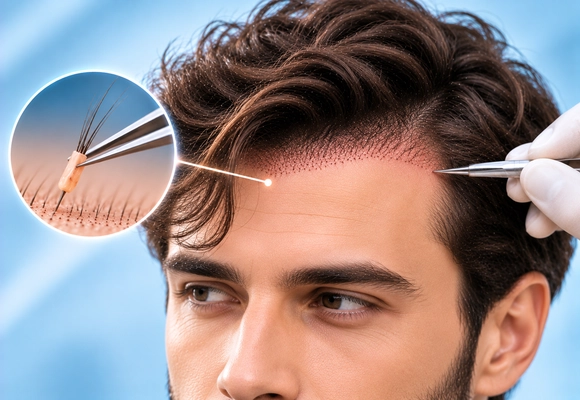
During Gold-FUE hair transplantation, individual follicular units are typically extracted using small surgical punches, prepared for implantation, and transferred into the recipient area. Depending on the clinic, certain instruments may be described as gold-coated or specially manufactured. However, the surgical process generally remains consistent with conventional FUE.
What Is the Gold-FUE Hair Transplant Technique?
Gold-FUE is a commercial term rather than a clearly defined medical technique with internationally standardized procedures. Different providers may use the name to describe different instruments, coatings, or treatment packages.
When a clinic offers Gold-FUE hair transplantation, patients should ask which specific stages differ from conventional FUE. The provider should identify the instruments used, explain their intended purpose, and provide evidence supporting any claimed advantages. A distinctive procedure name does not automatically indicate better clinical results.
What Does the Term Gold-FUE Mean in Hair Transplantation?
The word gold may refer to the appearance, material composition, or surface coating of particular surgical instruments. In some cases, it may simply form part of a clinic’s branding.
Because Gold-FUE hair transplantation lacks a universally accepted technical definition, the term alone does not establish that genuine gold is used during surgery. Patients should request the manufacturer’s specifications and clarification about the extraction and implantation equipment. The actual surgical method matters more than the commercial label.
What Makes Gold-FUE Different from Conventional FUE?
Conventional FUE uses specialized punches to remove individual follicular units from the donor region. The extracted grafts are then implanted into prepared recipient sites or placed using an appropriate implantation device.
A clinic advertising Gold-FUE hair transplantation may claim differences in instrument materials, surface coatings, or handling techniques. However, these variations do not necessarily change the fundamental extraction method. Without reliable comparative evidence, patients should not assume that Gold-FUE produces higher graft survival, greater density, or faster recovery.
Who Is a Good Candidate for Gold-FUE Hair Transplantation?
Surgical suitability depends on the diagnosis, donor hair quality, scalp health, and expected progression of hair loss. Patients with stable androgenetic alopecia and sufficient healthy donor follicles may be suitable for FUE-based restoration.
Before recommending Gold-FUE hair transplantation, a qualified physician should evaluate donor density, hair shaft characteristics, scalp conditions, and realistic coverage goals. Individuals with active inflammatory scalp disease, diffuse donor miniaturization, or insufficient donor reserves may not be suitable candidates, regardless of the instruments advertised.
What Types of Hair Loss Can Gold-FUE Treat?
Hair transplantation is generally considered when permanent hair loss affects selected areas while the donor region remains relatively stable. The underlying condition must be identified before deciding whether surgery is appropriate.
For suitable patients, Gold-FUE hair transplantation may improve coverage affected by androgenetic alopecia, stable hairline recession, or selected mature scars. However, temporary telogen effluvium, active alopecia areata, and uncontrolled scarring alopecia generally require medical treatment rather than immediate transplantation. The Gold-FUE label does not expand the established medical indications for FUE.
What Are the Potential Benefits of Gold-FUE Hair Transplantation?
Follicular Unit Extraction offers several practical advantages, including individual graft harvesting and the absence of a long linear donor scar. Carefully placed grafts may also provide natural-looking coverage in areas affected by permanent hair loss.
When performed appropriately, Gold-FUE hair transplantation may offer these same benefits because it generally relies on conventional FUE principles. However, advantages such as long-lasting hair growth and flexible graft placement come from successful transplantation rather than the presence of gold. Additional benefits attributed specifically to gold-coated instruments remain unproven.
What Are the Limitations of Gold-FUE?
Every hair transplantation procedure is limited by the number and quality of available donor follicles. Surgical instruments cannot create unlimited grafts or permanently prevent the progression of hereditary hair loss.
Patients considering Gold-FUE hair transplantation should also understand that bleeding, swelling, scarring, infection, follicle damage, and poor graft growth remain possible. Gold-related marketing claims may create unrealistic expectations if they are not supported by clinical research. The procedure’s success still depends heavily on surgical planning and medical expertise.
Are Gold-Coated Instruments Used in Gold-FUE Hair Transplantation?
Some surgical instruments can be manufactured with specialized metallic coatings, but the precise materials and purposes vary by product. A gold-colored surface does not necessarily indicate that an instrument contains genuine gold.
Clinics promoting Gold-FUE hair transplantation should be able to identify the instrument manufacturer, coating composition, and intended medical use. Patients should also ask whether the equipment is appropriately authorized for its intended purpose. Even when a genuine gold coating is present, that fact alone does not establish improved hair transplant outcomes.
Does Gold-FUE Have Any Scientifically Proven Advantages?
Clinical improvements should be demonstrated through well-designed studies comparing meaningful outcomes, such as follicle transection, graft survival, complications, and long-term hair density. Promotional claims and isolated patient photographs are not sufficient evidence.
At present, Gold-FUE hair transplantation does not have an established body of high-quality comparative evidence demonstrating consistent superiority over conventional FUE. Claims involving faster healing, reduced inflammation, or improved graft survival should therefore be treated cautiously. Patients should prioritize documented surgical experience and realistic treatment planning.
Gold-FUE vs. Traditional FUE: What Are the Differences?
Traditional FUE describes the extraction of individual follicular units using small punches, which may be manually operated or motorized. Grafts are subsequently implanted using established recipient-site preparation or implantation methods.
By comparison, Gold-FUE hair transplantation is usually presented as a variation involving particular instrument materials or branded equipment. The underlying extraction principles may be essentially identical. There is no reliable basis for assuming that a gold-related label produces better results than properly performed traditional FUE.
Gold-FUE vs. Sapphire FUE: Which Technique Is More Suitable?
Sapphire FUE typically refers to the use of sapphire-tipped blades for creating recipient channels after follicular extraction. It does not mean that follicles are extracted using sapphire blades.
In contrast, Gold-FUE hair transplantation may refer to coated extraction instruments or another clinic-specific variation of FUE. These terms may describe different surgical stages, making direct comparisons difficult. Neither sapphire blades nor gold-related equipment has been established as universally superior for graft survival or final density.
Gold-FUE vs. DHI: What Are the Key Differences?
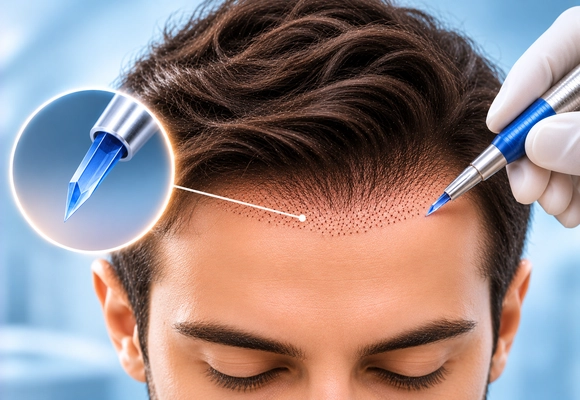
Direct Hair Implantation (DHI) commonly involves placing harvested follicles with a pen-shaped implantation device. The grafts are usually collected using FUE, meaning DHI and FUE are not necessarily competing extraction techniques.
A procedure marketed as Gold-FUE hair transplantation may use conventional recipient channels or implanter-assisted placement, depending on the clinic. The Gold-FUE label generally concerns instrument branding or extraction-related claims, while DHI primarily describes implantation. The best surgical approach depends on individual anatomy and the experience of the treating team.
How Are Hair Follicles Extracted During Gold-FUE?
Follicular extraction requires separating individual follicular units from surrounding scalp tissue without unnecessarily damaging their structure. The surgeon must account for follicle depth, growth direction, and curvature.
During Gold-FUE hair transplantation, specialized punches are typically used to score the tissue surrounding each follicular unit before careful removal. The harvested grafts must then be protected from dehydration, crushing, and prolonged exposure outside the body. Accurate extraction technique remains essential regardless of the punch’s coating or appearance.
How Is the Donor Area Evaluated for Gold-FUE?
Donor assessment determines how many follicles can be harvested while preserving acceptable coverage in the remaining scalp. Hair density, shaft thickness, follicular stability, and the distribution of thinning all influence the surgical plan.
Before Gold-FUE hair transplantation, a physician should examine the donor region and assess the risk of future hair loss. Trichoscopy may help identify miniaturization or other concerning findings. Excessive harvesting can create permanent patchy thinning, and specialized instrument coatings do not eliminate this risk.
How Many Grafts Are Needed for Gold-FUE Hair Transplantation?
The required graft count depends on the size of the recipient area, existing hair density, hair characteristics, and the desired coverage. A small hairline correction generally requires fewer grafts than extensive frontal and crown restoration.
For patients undergoing Gold-FUE hair transplantation, the number of grafts should be determined through an individualized medical assessment rather than a fixed package promise. Donor capacity and future hair loss must also be considered. Harvesting more grafts than the donor region can safely provide may compromise long-term results.
How Is a Natural-Looking Hairline Designed with Gold-FUE?
Hairline design requires attention to facial proportions, age, existing hair characteristics, and the likely progression of hereditary thinning. The surgeon must also consider the angle, direction, and distribution of individual follicular units.
During Gold-FUE hair transplantation, a natural-looking hairline can be created by using appropriate graft selection and careful implantation. Single-hair follicular units are commonly preferred near the frontal edge, with larger units placed farther behind when suitable. The quality of the design depends on surgical judgment rather than the advertised instrument material.
Gold-FUE Hair Transplantation Prices 2026
In 2026, the cost of Gold-FUE hair transplantation varies according to the number of grafts required, the surgeon’s experience, the healthcare facility, and any specialized instruments included in the procedure.
Frequently Asked Questions
Is Gold-FUE a Recognized Medical Hair Transplant Technique?
Follicular Unit Extraction is an established method of harvesting individual hair follicles. However, Gold-FUE hair transplantation is not a universally standardized medical technique with a separate, widely accepted clinical definition. The term generally reflects clinic-specific branding or instrument-related claims.
Is Gold-FUE Better Than Regular FUE?
Surgical outcomes depend on follicle quality, extraction accuracy, implantation, and postoperative healing. Current evidence does not establish that Gold-FUE hair transplantation consistently produces better graft survival or density than conventional FUE. Patients should compare surgeon experience and clinical standards rather than relying on the procedure’s name.
Is Gold-FUE Better Than Sapphire FUE?
These labels may refer to different instruments or stages of transplantation. Although Gold-FUE hair transplantation may involve gold-related equipment, sapphire FUE usually describes sapphire-tipped blades used to create recipient channels. Neither approach has demonstrated universal superiority in well-established comparative clinical evidence.
Is Gold-FUE Hair Transplantation Safe?
FUE-based surgery carries risks including infection, bleeding, scarring, swelling, and follicular damage. When appropriately performed, Gold-FUE hair transplantation may have a safety profile similar to conventional FUE, but any additional coating-specific risks or benefits depend on the actual equipment used. Patients should choose a qualified physician and an appropriately authorized medical facility.
Is Gold-FUE Hair Transplantation Painful?
Local anesthesia is generally used to numb the donor and recipient areas during the procedure. Patients undergoing Gold-FUE hair transplantation may experience brief discomfort during anesthetic injections and temporary tenderness afterward. The presence of gold-related instruments has not been proven to eliminate procedural discomfort.
Does Gold-FUE Use Real Gold?
The answer depends on the equipment and terminology used by the individual clinic. Some providers may describe Gold-FUE hair transplantation as involving gold-coated instruments, while others may use the term primarily for marketing. Patients should request manufacturer documentation before assuming that genuine gold is present.
Are Gold-Coated Hair Transplant Instruments More Effective?
Instrument effectiveness depends on design, sharpness, compatibility with follicular anatomy, and proper surgical use. Although gold-coated equipment may be advertised for Gold-FUE hair transplantation, reliable clinical evidence has not established that such coatings consistently improve extraction accuracy or graft survival. Material claims should be supported by relevant testing and comparative studies.
Can Gold-FUE Reduce Tissue Damage During Hair Transplantation?
Tissue damage is influenced by punch size, instrument alignment, extraction technique, and the patient’s follicular anatomy. A carefully performed Gold-FUE hair transplantation procedure may minimize unnecessary trauma through appropriate surgical technique, but gold-related equipment has not been proven to provide an independent protective advantage. Poor extraction technique can still damage follicles regardless of instrument coating.
Does Gold-FUE Cause Less Bleeding or Swelling?
Bleeding and postoperative swelling depend on several factors, including surgical technique, scalp characteristics, anesthesia, and the extent of treatment. There is insufficient reliable evidence that Gold-FUE hair transplantation consistently reduces these effects compared with conventional FUE. Patients should follow postoperative instructions and seek medical advice if symptoms become severe or worsen.
Does Gold-FUE Heal Faster Than Traditional FUE?
Recovery after FUE commonly involves temporary redness, small crusts, and mild scalp tenderness. Although clinics may promote Gold-FUE hair transplantation as a faster-healing option, convincing comparative evidence supporting this claim is lacking. Healing depends primarily on the extent of surgery, tissue handling, individual health, and postoperative care.