FUE Hair Transplant
What Is FUE Hair Transplant in Turkey?
Hair loss can affect the hairline, temples, crown, and overall scalp density. For people experiencing permanent hair thinning, surgical hair restoration offers a way to redistribute healthy follicles from areas with relatively stable hair growth to areas where hair has been lost.
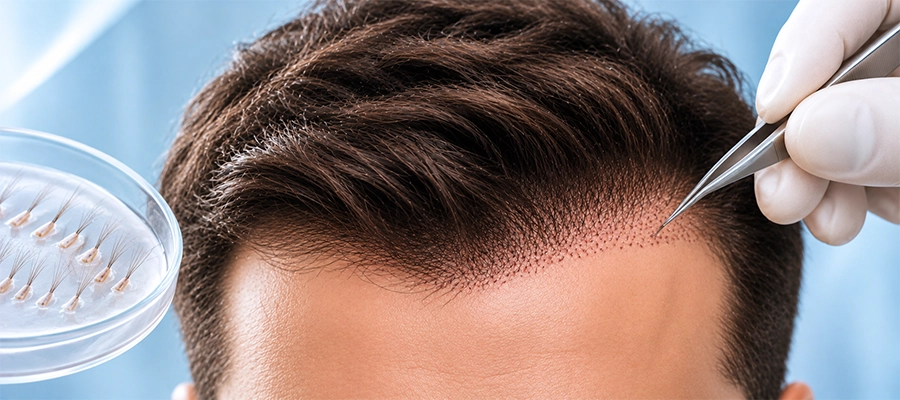
For patients considering treatment abroad, FUE hair transplant in Turkey is a surgical procedure that involves extracting individual follicular units from a donor area and implanting them into thinning or bald regions. FUE stands for Follicular Unit Extraction, a technique designed to harvest grafts without removing a continuous strip of scalp tissue.
Turkey has become a well-known destination for hair transplantation, but treatment quality varies between clinics. The experience of the medical team, donor-area management, patient selection, and postoperative care are more important than promotional claims about a particular technique.
How Does FUE Hair Transplantation Work?
Hair transplantation involves moving living hair follicles rather than creating new ones. The procedure generally begins with an examination of the scalp, donor density, hair loss pattern, and the number of grafts required.
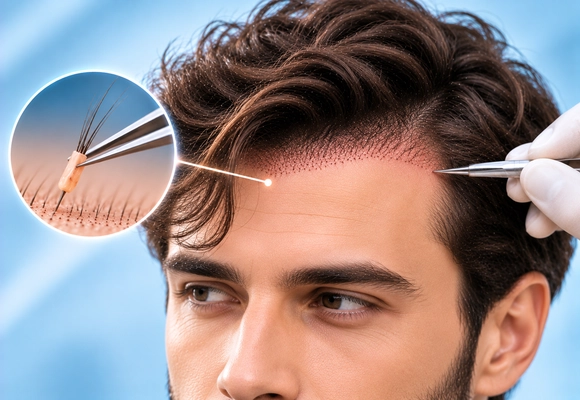
During an FUE hair transplant in Turkey, follicular units are individually extracted using specialized punches and prepared for implantation. The surgical team then places the grafts into the recipient area at appropriate angles, directions, and depths. Local anesthesia is commonly used, and the procedure may take several hours depending on the graft count.
What Is Follicular Unit Extraction (FUE)?
Hair naturally grows in small groups called follicular units, which commonly contain one to four hairs. Preserving these units during extraction is important for maintaining graft viability and achieving natural-looking coverage.
The harvesting stage of an FUE hair transplant in Turkey uses small circular instruments to separate individual follicular units from surrounding scalp tissue. Unlike follicular unit transplantation (FUT), FUE does not require removing a long strip of skin. However, the technique still creates small wounds that heal with tiny scars.
Who Is a Good Candidate for FUE Hair Transplantation?
Successful hair restoration depends on the availability of healthy donor follicles and the long-term stability of the patient’s hair loss. Individuals with androgenetic alopecia and adequate donor density may be suitable candidates.
Before recommending an FUE hair transplant in Turkey, a qualified physician should assess the scalp, hair shaft thickness, medical history, and expected progression of hair loss. Patients with active scalp infections, uncontrolled inflammatory conditions, or insufficient donor reserves may require treatment or alternative approaches before surgery.
What Types of Hair Loss Can FUE Treat?
Hair loss can develop from hereditary factors, hormonal changes, inflammatory diseases, medications, and other medical conditions. Not all causes of hair loss are suitable for surgical transplantation.
In selected patients, an FUE hair transplant in Turkey can restore coverage in areas affected by stable pattern hair loss or certain mature scars. However, temporary shedding conditions and active scarring alopecias generally require medical treatment first. A proper diagnosis is essential because transplanted follicles may also be affected by ongoing disease.
What Are the Benefits of FUE Hair Transplantation?
Modern follicular extraction techniques allow surgeons to harvest individual grafts without creating a long linear donor scar. This can be useful for patients who prefer shorter hairstyles or want to avoid strip harvesting.
When appropriately planned, an FUE hair transplant in Turkey can provide natural-looking hairline restoration and improved coverage in thinning areas. The technique also allows grafts to be collected from different parts of a suitable donor region. However, results depend on donor quality, surgical planning, and careful graft handling.
What Are the Limitations of the FUE Technique?
Every hair transplant is limited by the number and quality of follicles available for harvesting. Extracting too many grafts can permanently reduce donor density and create visible thinning.
Patients considering an FUE hair transplant in Turkey should understand that the procedure cannot stop hereditary hair loss or restore unlimited density. Large bald areas may require staged treatment, and some individuals may not have enough donor hair for their desired coverage. Poor extraction or implantation techniques can also reduce graft survival.
What Are the Different Types of FUE Hair Transplantation?
Follicular unit extraction can be combined with different implantation tools and approaches to donor-area preparation. These variations may influence surgical workflow, visibility, and the immediate postoperative appearance.
The appropriate FUE hair transplant in Turkey method depends on the patient’s hair characteristics, graft requirements, and treatment goals. Terms such as sapphire FUE and unshaven FUE generally describe technical modifications rather than completely different methods of follicle harvesting.
Traditional FUE Hair Transplant
Conventional FUE involves extracting individual follicular units with small punches, often after trimming the donor area. The harvested grafts are then implanted into recipient sites prepared by the surgical team.
In a traditional FUE hair transplant in Turkey, recipient channels may be created using suitable blades or needles before graft placement. The technique can provide natural results when hairline design, graft distribution, and donor management are carefully planned. Shaving requirements depend on the surgical approach.
Sapphire FUE Hair Transplant
The instruments used to prepare recipient channels can vary between hair transplant procedures. Sapphire FUE refers to the use of sapphire-tipped blades for making these openings.
During a sapphire FUE hair transplant in Turkey, follicular units are generally harvested through conventional FUE extraction and implanted into channels prepared with sapphire blades. Although some clinics promote faster healing or greater density, sapphire instruments have not been proven universally superior to other appropriately used tools.
Unshaven FUE Hair Transplant
Some patients prefer to maintain their hairstyle during the early recovery period. Unshaven techniques aim to reduce the amount of visible trimming required before surgery.
For suitable candidates, an unshaven FUE hair transplant in Turkey may involve extracting grafts through existing hair or trimming small concealed donor sections. The procedure can be more technically demanding and may not be practical for extensive graft sessions. Preserving hair length does not guarantee better graft survival.
Long Hair FUE Transplant
Traditional follicular extraction usually involves shortening donor hair shafts before harvesting. Long hair FUE uses specialized methods to extract follicles while preserving longer hair shafts.
In a long hair FUE hair transplant in Turkey, the transplanted strands may provide an immediate indication of graft direction and placement. However, these hair shafts commonly shed during the early postoperative period. Lasting results depend on subsequent follicular growth rather than the initial appearance.
FUE vs. DHI Hair Transplant: What Are the Differences?
Hair transplantation terminology often combines extraction and implantation techniques. FUE describes how follicular units are harvested, while Direct Hair Implantation (DHI) primarily describes how grafts are placed.
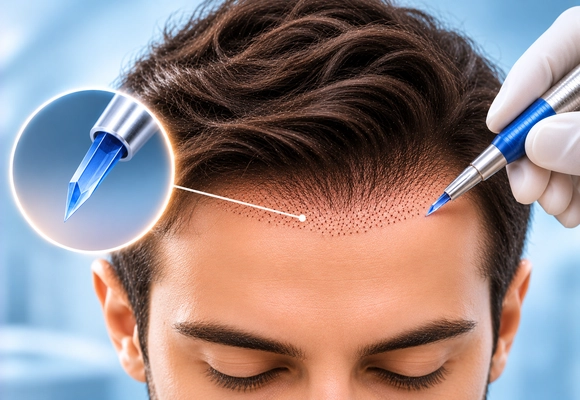
A conventional FUE hair transplant in Turkey may involve creating recipient channels before inserting grafts with forceps. DHI commonly uses an implanter pen that creates an opening and places the graft during the same action. Because DHI procedures frequently use FUE harvesting, the methods are not entirely separate alternatives.
FUE vs. Sapphire FUE: Which Technique Is Better?
The quality of a hair transplant depends on accurate graft placement, donor preservation, and appropriate surgical planning. The material used to create recipient channels is only one aspect of the procedure.
When comparing conventional and sapphire FUE hair transplant in Turkey techniques, neither approach is automatically better for graft survival, density, or recovery. The preferred method depends on the patient’s scalp characteristics, the recipient area, and the surgeon’s experience.
FUE vs. FUT Hair Transplant: What Are the Key Differences?
Follicular unit transplantation (FUT) involves removing a narrow strip of scalp tissue from the donor region and separating it into follicular grafts. FUE instead harvests follicular units individually.
Patients choosing an FUE hair transplant in Turkey avoid the long linear scar associated with FUT, but small extraction scars remain. FUT may be useful in selected patients requiring substantial graft numbers or careful donor management. Both procedures have advantages and limitations, and the best option depends on individual anatomy and long-term planning.
How Is the Donor Area Evaluated for FUE Hair Transplantation?
Donor hair is a limited resource that must support both the initial procedure and potential future needs. The back and sides of the scalp are commonly assessed because follicles in these regions are often more resistant to androgenetic hair loss.
Before an FUE hair transplant in Turkey, the physician should examine donor density, hair thickness, follicular distribution, scalp health, and the extent of existing miniaturization. The extraction plan must preserve sufficient hair to maintain a natural donor-area appearance. Excessive harvesting can cause permanent thinning.
FUE Hair Transplant in Turkey Prices 2026
In 2026, the cost of an FUE hair transplant in Turkey varies according to the required graft count, surgical technique, clinic facilities, and experience of the medical team.
Frequently Asked Questions
Is FUE Hair Transplantation Safe in Turkey?
Hair transplantation is a surgical procedure that carries risks, including infection, bleeding, scarring, and poor graft growth. A properly performed FUE hair transplant in Turkey can be safe in an appropriately equipped medical facility with qualified supervision. Patients should verify clinic authorization, physician credentials, and postoperative care arrangements before proceeding.
Is FUE Hair Transplantation Painful?
Local anesthesia is generally used to numb the donor and recipient areas during surgery. Patients undergoing an FUE hair transplant in Turkey may feel brief discomfort during anesthetic injections and temporary tenderness afterward. Significant or worsening pain should be evaluated by the treating physician.
What Is the Success Rate of FUE Hair Transplantation?
Graft survival depends on donor quality, extraction technique, handling, implantation, and postoperative healing. Although clinics may advertise high percentages, an FUE hair transplant in Turkey does not have one universally guaranteed success rate. Patients should be cautious about claims of complete graft survival or guaranteed density.
Does FUE Hair Transplantation Leave Permanent Scars?
Individual follicular extraction creates small wounds that heal with tiny scars. Therefore, an FUE hair transplant in Turkey is not completely scar-free, even though it avoids the long linear scar associated with FUT. Scar visibility depends on extraction density, hair length, skin characteristics, and healing.
Is FUE Suitable for Advanced Hair Loss?
Extensive baldness can require more follicles than the donor region can safely provide. In selected cases, an FUE hair transplant in Turkey may improve coverage in priority areas such as the frontal hairline. However, complete restoration of youthful density may not be achievable, and staged treatment or alternative options may be necessary.
What Is the Best Age for an FUE Hair Transplant?
Hair loss patterns can continue changing throughout adulthood, particularly in younger patients. A carefully planned FUE hair transplant in Turkey should consider the stability of hair loss, donor reserves, and likely future thinning rather than age alone. There is no single ideal age for every patient.
Can You Get an FUE Hair Transplant with Thin Hair?
Hair shaft thickness and donor density influence how much coverage a transplant can create. For patients with fine but healthy donor follicles, an FUE hair transplant in Turkey may still be possible. However, very thin or miniaturized donor hair can limit achievable density and may indicate an unsuitable donor region.
Can FUE Hair Transplantation Use Body Hair as a Donor Source?
Some patients with limited scalp donor reserves may be assessed for transplantation using follicles from the beard or other body areas. In selected cases, an FUE hair transplant in Turkey can incorporate body hair grafts as a supplementary source. However, differences in growth cycles, hair texture, and graft survival mean body hair is not an equivalent replacement for healthy scalp donor hair.