DHI Hair Transplant
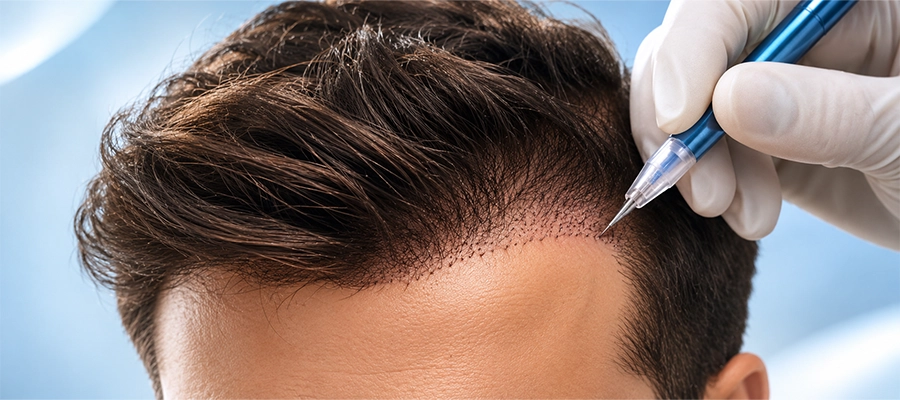
What Is DHI Hair Transplant in Turkey?
Hair thinning and permanent hair loss can affect the hairline, temples, and crown, changing the appearance of overall hair density. Modern hair restoration procedures aim to redistribute healthy follicles from a donor area to regions affected by hair loss.
For patients considering treatment abroad, DHI hair transplant in Turkey is a surgical hair restoration option that uses a specialized implantation pen to place harvested follicular units into the scalp. DHI stands for Direct Hair Implantation and is commonly combined with follicular unit extraction (FUE) for graft harvesting.
Turkey is a popular destination for hair transplantation, but treatment quality depends on the medical team, clinic standards, and individual surgical planning rather than the country alone. A successful procedure requires an appropriate diagnosis, realistic expectations, and careful donor hair management.
How Does DHI Hair Transplantation Work?
Hair transplantation involves relocating viable hair follicles from areas with relatively stable hair growth to areas affected by thinning or baldness. The follicles are usually collected individually from the back or sides of the scalp.
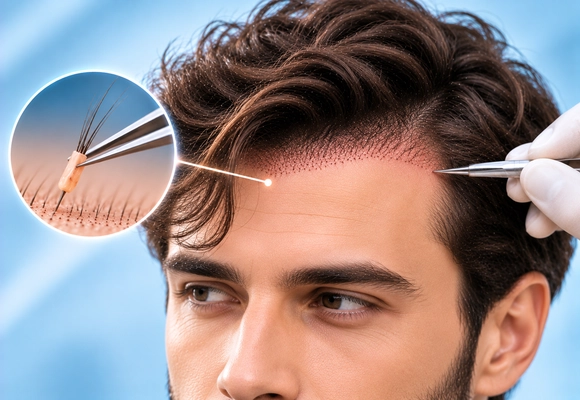
During a DHI hair transplant in Turkey, harvested grafts are prepared and loaded into an implantation device that allows the surgeon to insert them into the recipient area. The procedure aims to achieve an appropriate hair direction, angle, and distribution while preserving the available donor supply.
What Is the Direct Hair Implantation (DHI) Technique?
The placement of hair follicles is one of the most important stages of surgical hair restoration. Their positioning influences how naturally the transplanted hair blends with existing strands.
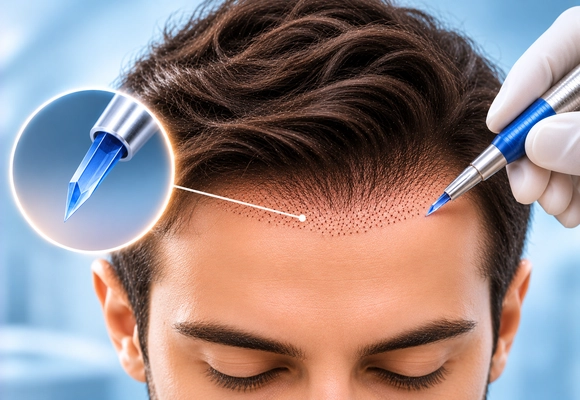
With a DHI hair transplant in Turkey, the implantation stage typically uses a pen-shaped instrument to create the recipient opening and place the graft during the same action. Despite its name, DHI is not an entirely separate graft-harvesting method. Clinics generally obtain the follicles using FUE extraction techniques.
What Is a Choi Implanter Pen?
Specialized implantation instruments are designed to help position individual follicular units at controlled angles and depths. The Choi implanter pen is a hollow, needle-tipped device into which a prepared graft is loaded before insertion.
In a DHI hair transplant in Turkey, the Choi pen or a similar implanter may be used to place grafts directly into the recipient scalp. Different needle sizes can accommodate different graft characteristics. However, the instrument itself does not guarantee better survival rates or more natural results.
Who Is a Good Candidate for DHI Hair Transplantation?
The suitability of a hair transplant depends on the cause of hair loss, the condition of the scalp, and the availability of healthy donor follicles. Patients with stable androgenetic alopecia and sufficient donor density may be suitable candidates.
Before recommending a DHI hair transplant in Turkey, a qualified physician should assess hair loss progression, scalp health, medical history, and long-term expectations. Patients with active inflammatory scalp disease, uncontrolled medical conditions, or insufficient donor hair may need alternative treatment.
What Types of Hair Loss Can DHI Treat?
Hair loss has several causes, and not every condition can be corrected through follicle transplantation. Pattern hair loss, also called androgenetic alopecia, is among the most common reasons patients seek surgical restoration.
For selected patients, a DHI hair transplant in Turkey may restore coverage in areas affected by permanent pattern hair loss or certain stable scars. However, temporary shedding, active alopecia areata, and untreated scarring alopecias generally require medical assessment and management before transplantation is considered.
What Are the Benefits of DHI Hair Transplantation?
Precise graft positioning is essential for creating a natural-looking hairline and appropriate coverage. Implanter-based placement can offer the surgical team control over graft angle, depth, and direction.
When performed appropriately, a DHI hair transplant in Turkey may be useful for selected patients requiring detailed implantation around existing hair. Some procedures can also be performed without completely shaving the recipient area. Nevertheless, these potential advantages depend on the surgeon’s technique and do not establish DHI as universally superior to other methods.
What Are the Limitations of the DHI Technique?
Every hair transplantation method is limited by the patient’s donor supply and the biological survival of transplanted follicles. A technique cannot create new follicles or permanently stop the progression of hereditary hair loss.
Patients choosing a DHI hair transplant in Turkey should understand that extensive baldness may require a large number of grafts or more than one procedure. Implanter-based placement can also be time-consuming and requires an experienced team. Poor planning may cause unnatural density, donor depletion, or damage to existing hair.
DHI vs. FUE Hair Transplant: What Are the Differences?
Hair restoration terminology can be confusing because extraction and implantation describe different surgical stages. FUE refers to the removal of individual follicular units, while DHI primarily describes an implantation approach.
In a DHI hair transplant in Turkey, grafts are commonly extracted using FUE and then inserted with an implanter pen. In conventional FUE procedures, the surgeon may create recipient channels before placing grafts with forceps. Both approaches can produce natural results, and neither consistently outperforms the other in every patient.
DHI vs. Sapphire FUE: Which Technique Is Better?
Sapphire FUE refers to an implantation workflow that uses sapphire-tipped blades to create recipient channels. The term describes the channel-making instrument rather than a different method of harvesting follicles.
When comparing sapphire FUE with a DHI hair transplant in Turkey, the main difference usually concerns how recipient sites are prepared and grafts are inserted. Neither method is automatically better for density, healing, or graft survival. The preferred approach depends on the recipient area, graft characteristics, and surgical team’s expertise.
How Is the Donor Area Evaluated for DHI Hair Transplantation?
The back and sides of the scalp are commonly used as donor regions because follicles in these areas are often more resistant to androgenetic hair loss. However, donor density and long-term stability vary between individuals.
Before a DHI hair transplant in Turkey, the physician should examine follicular density, hair thickness, scalp condition, and the pattern of existing hair loss. Donor harvesting must be distributed carefully to avoid visible thinning. Excessive extraction can permanently reduce donor-area density.
What Type of Anesthesia Is Used for DHI Hair Transplantation?
Hair transplantation is generally performed while the patient is awake, using local anesthesia to numb the donor and recipient areas. The anesthetic injections may cause temporary stinging or pressure.
During a DHI hair transplant in Turkey, local anesthetic medications are commonly administered before graft extraction and implantation. Some clinics may offer additional sedation when medically appropriate. Anesthesia choices should be based on the patient’s health, medication history, and the clinic’s ability to monitor and manage complications.
How Long Does a DHI Hair Transplant Procedure Take?
Procedure length depends on the number of grafts, the size of the treatment area, and the surgical team’s workflow. More extensive transplantation usually requires longer extraction and implantation sessions.
A typical DHI hair transplant in Turkey may take approximately six to nine hours, although shorter or longer procedures are possible. Breaks, graft preparation, and anesthesia administration also affect the total time. Patients should not assume that faster surgery produces better results.
What Is the Recovery Timeline After DHI Hair Transplantation?
The scalp usually develops temporary redness, swelling, and small crusts around the implanted follicles. These changes are part of the early healing process and typically improve over the first one to two weeks.
Following a DHI hair transplant in Turkey, many patients experience temporary shedding of transplanted hair shafts during the first several weeks. New growth commonly becomes noticeable after three to four months, with substantial improvement over six to twelve months. Final maturation may take twelve to eighteen months, particularly in the crown.
How Should You Wash Your Hair After a DHI Hair Transplant?
Newly implanted grafts require careful handling during the early postoperative period. Aggressive rubbing, scratching, and high-pressure water can irritate the scalp and disturb healing.
After a DHI hair transplant in Turkey, patients should follow their surgical team’s specific washing instructions, which may involve gentle rinsing and an approved shampoo. The first wash is often performed or supervised by the clinic. Patients should avoid picking crusts and seek medical advice if increasing pain, spreading redness, fever, or discharge develops.
DHI Hair Transplant in Turkey Prices 2026
In 2026, the cost of a DHI hair transplant in Turkey varies according to the number of grafts, the clinic’s pricing structure, and the medical team’s experience.
Frequently Asked Questions
Is DHI Hair Transplantation Better Than FUE?
Both approaches can achieve natural-looking results when properly performed. Although a DHI hair transplant in Turkey uses an implanter-based placement technique, graft harvesting usually still relies on FUE. There is no reliable basis for claiming that DHI is superior for every patient.
Is DHI More Expensive Than Sapphire FUE in Turkey?
Pricing differences often reflect the clinic’s package structure, surgical team, and graft requirements rather than the technique alone. At some clinics, a DHI hair transplant in Turkey may cost more than sapphire FUE because of the implantation workflow and equipment. However, this is not a universal pricing rule.
Is DHI Hair Transplantation Safe in Turkey?
Hair transplantation is a surgical procedure with risks that include infection, bleeding, scarring, poor graft growth, and an unnatural appearance. A properly planned DHI hair transplant in Turkey can be performed safely in an appropriately equipped medical setting, but no procedure is risk-free. Patients should verify physician credentials, clinic authorization, and postoperative care arrangements.
Is DHI Hair Transplantation Painful?
Local anesthesia usually reduces discomfort during graft extraction and implantation. Patients undergoing a DHI hair transplant in Turkey may feel brief pain during anesthetic injections and mild tenderness afterward. Significant or worsening pain should be reported to the treating physician.
Does DHI Hair Transplantation Leave Scars?
Individual follicular extraction creates small wounds in the donor area, which heal with tiny scars. Therefore, a DHI hair transplant in Turkey is not completely scar-free, even when linear strip scars are avoided. Scar visibility depends on extraction density, healing, hair length, and surgical technique.
Is DHI Suitable for Advanced Hair Loss?
Extensive baldness requires careful planning because the number of available donor follicles is limited. In selected cases, a DHI hair transplant in Turkey may improve coverage in priority areas, but full restoration of youthful density may not be possible. Some patients may require staged procedures or nonsurgical alternatives.
Can DHI Be Used for Beard and Eyebrow Transplants?
Facial hair restoration requires careful attention to follicle direction, angle, and natural growth patterns. For suitable candidates, a DHI hair transplant in Turkey may be adapted for beard or eyebrow transplantation. These procedures require specialized experience because small placement errors can noticeably affect appearance.
Does DHI Damage Existing Hair Follicles?
Implanting new follicles between existing hairs can carry a risk of injuring nearby follicles. During a DHI hair transplant in Turkey, careful placement and appropriate graft spacing may reduce this risk, but cannot eliminate it entirely. Temporary shock loss may also occur after surgery, particularly in areas with weakened native hair.